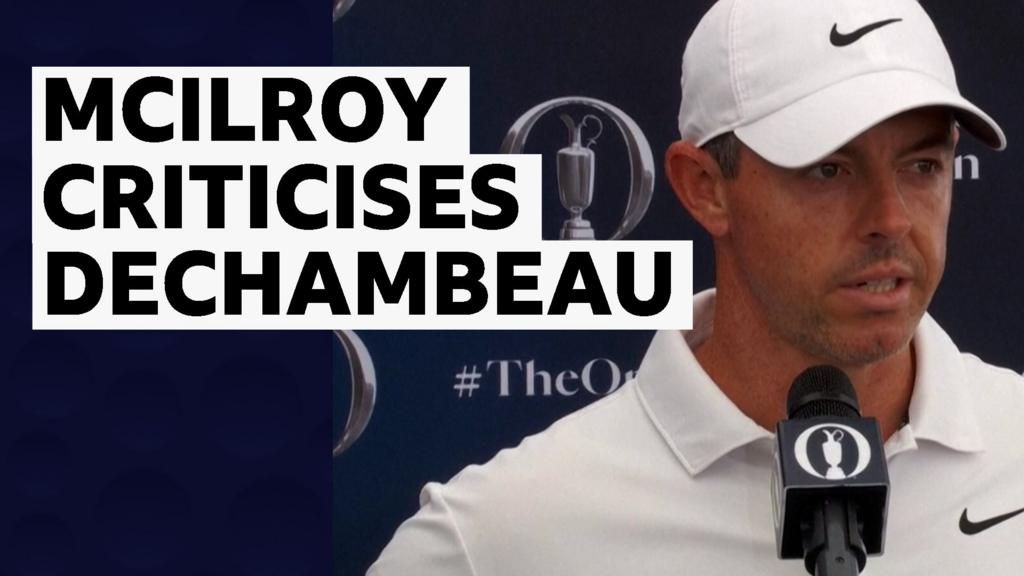
Rory McIlroy has added a sharp edge to the 2026 Open Championship narrative by openly questioning Bryson DeChambeau’s conduct after the American was handed a two-stroke penalty in the second round. McIlroy’s description of the situation as “performative” and “for attention” turns what might have remained a routine rules issue into one of the tournament’s most talked-about flashpoints.
For supporters, the significance is not just the personal friction between two of golf’s biggest names. It is the way a disciplinary decision can quickly spill beyond the scorecard and affect the rhythm of a major championship. In this case, discussions with tournament officials were serious enough to delay the release of the third-round tee times, underlining how much administrative fallout can follow a high-profile rules dispute.
Why the row matters beyond the penalty
In elite golf, penalties are part of the sport’s structure, but the public reaction to them can shape the wider story of a major. McIlroy’s comments ensure the focus is no longer limited to the strokes lost by DeChambeau. Instead, attention has shifted to the manner in which the issue was handled and the impression it left on one of the game’s leading figures.
That matters because both players carry significant weight with audiences. McIlroy remains one of the most recognisable and influential names in the sport, while DeChambeau’s profile has long been tied to his unconventional style, bold personality and ability to generate debate. When those two worlds collide, the result is rarely quiet, and the Open has now inherited that tension at a crucial stage of the week.
What it means for the Open Championship
The immediate sporting impact is that the tournament’s competitive focus risks being overshadowed by off-course discussion. Delayed tee times are not just a logistical footnote; they can affect preparation, recovery and the sense of order players rely on during a major. For fans following the event closely, it also adds uncertainty to a championship that is already demanding in terms of conditions, pressure and momentum.
From a tactical perspective, the episode does not change the golf itself, but it does alter the atmosphere around it. Players often speak about controlling what they can control, and this is a reminder that external controversy can become part of the mental test. McIlroy’s willingness to speak so directly suggests he sees the matter as more than a simple rules correction, and that alone gives the story extra weight.
For the Open, the broader implication is clear: the championship now has a second storyline running alongside the leaderboard. Whether that fuels DeChambeau, distracts him, or simply fades into the background will depend on how both he and McIlroy respond on the course. For now, the dispute has ensured that one of golf’s biggest stages is being shaped by personality as much as performance.
Source note: This article was prepared using publicly available information from BBC Sport and expanded with editorial context.
Share this content: