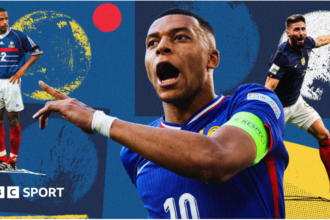
Lionel Messi remains the gravitational centre of Argentina’s biggest ambitions, even as the way he influences matches has changed. BBC Sport’s analysis looks at the long arc of his career, from the explosive winger who could decide games with repeated bursts of acceleration to a veteran whose value is now shaped more by timing, economy of movement and decisive moments than constant running.
That evolution matters because Argentina are chasing a rare piece of football history. If they are to defend the World Cup successfully, they would become the first side to do so since 1962 and only the third nation ever. In a tournament where margins are tiny and experience often becomes decisive, Messi’s role is not just symbolic. It is tactical, psychological and structural.
How Messi’s game has changed
For much of his career, Messi’s threat came from volume as much as quality: repeated touches, dribbles, accelerations and the ability to carry attacks from deep or wide areas. The modern version is different. He may cover less ground, but he still shapes the game by choosing the right moments to drop into space, receive between the lines and release runners around him.
That shift is not a sign of decline so much as adaptation. Elite players who age well often do so by reducing unnecessary movement and preserving energy for the actions that matter most. For Argentina, that can be an advantage if the team is built to protect him, recover the ball quickly and give him enough freedom to decide matches in the final third.
What it means for Argentina
Supporters will read this as both reassurance and warning. Reassurance, because Messi is still central to Argentina’s identity and remains capable of influencing the biggest games. Warning, because a team built around a veteran star must manage his workload carefully and ensure the collective structure does not become too dependent on one player’s moments of brilliance.
In practical terms, Argentina’s balance will be crucial. If they can keep the game compact, win duels in midfield and create transition opportunities, Messi’s reduced running load becomes a feature rather than a flaw. He does not need to dominate every phase to dominate the result.
That is why this BBC piece resonates beyond simple nostalgia. It is not just about how Messi has changed; it is about how Argentina must change around him. The challenge of defending a World Cup title is already immense. Doing it with a player in the later stage of his career adds another layer of complexity, but also another layer of belief.
For Argentina fans, the message is clear: Messi may be less of a sprinter than before, but he is still the player most likely to tilt a tournament. And if history is to be made, he will almost certainly be at the heart of it.
Source note: This article was prepared using publicly available information from BBC Sport and expanded with editorial context.
Share this content: