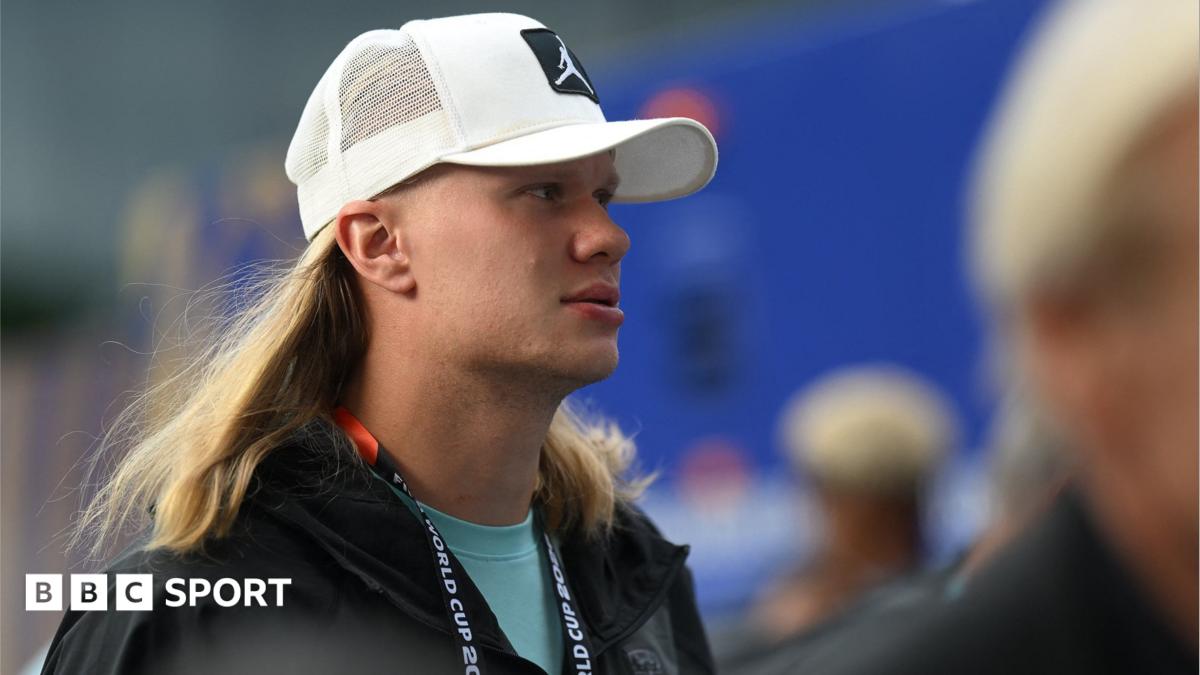
Norway’s decision to leave Erling Haaland out has turned a headline-grabbing World Cup storyline into a broader debate about priorities, squad management and risk. When a team’s most decisive forward is unavailable, the conversation quickly shifts from individual star power to the balance between short-term results and long-term planning.
The BBC’s framing of the fixture as a Golden Boot duel between Kylian Mbappe and Haaland underlines how much attention elite scorers attract on the international stage. But the more immediate issue for Norway is not the award race itself. It is whether they can remain competitive without their main attacking reference point, and whether preserving him now is worth the cost of reduced firepower in the present.
What Haaland’s absence means for Norway
Haaland is the type of striker around whom game plans are often built. His movement, finishing and physical presence change how opponents defend, and his absence forces Norway to look for different ways to create chances. That can mean more emphasis on combination play, wider service into the box, or a more collective approach to chance creation rather than relying on one focal point.
For supporters, the reaction is likely to be mixed. Some will see caution as sensible, especially if the priority is protecting a player whose availability can define a campaign. Others will argue that in a tournament environment, every opportunity matters and that leaving out a striker of Haaland’s calibre is a gamble that can alter momentum.
The wider tournament context
The Golden Boot angle adds another layer, but it should not obscure the practical reality for Norway. Individual scoring races are secondary to team outcomes, yet they often shape the narrative around major tournaments. Mbappe and Haaland are among the most recognisable forwards in world football, so any fixture involving both names naturally draws attention beyond the result itself.
For Norway, the key question is whether they can stay efficient without overexposing their squad or asking too much of one player. In modern international football, managing minutes and physical load is increasingly part of the tactical conversation. Resting a star can be a sign of planning rather than caution for its own sake, but it also carries obvious competitive risk if the team cannot replace his output.
What this story really highlights is the tension between ambition and prudence. Norway want to compete, but they also have to think about the bigger picture. When a player like Haaland is left out, every decision is magnified because it affects not only the immediate match but the wider perception of how seriously a team is treating its chances.
Source note: This article was prepared using publicly available information from BBC Sport and expanded with editorial context.
Share this content: