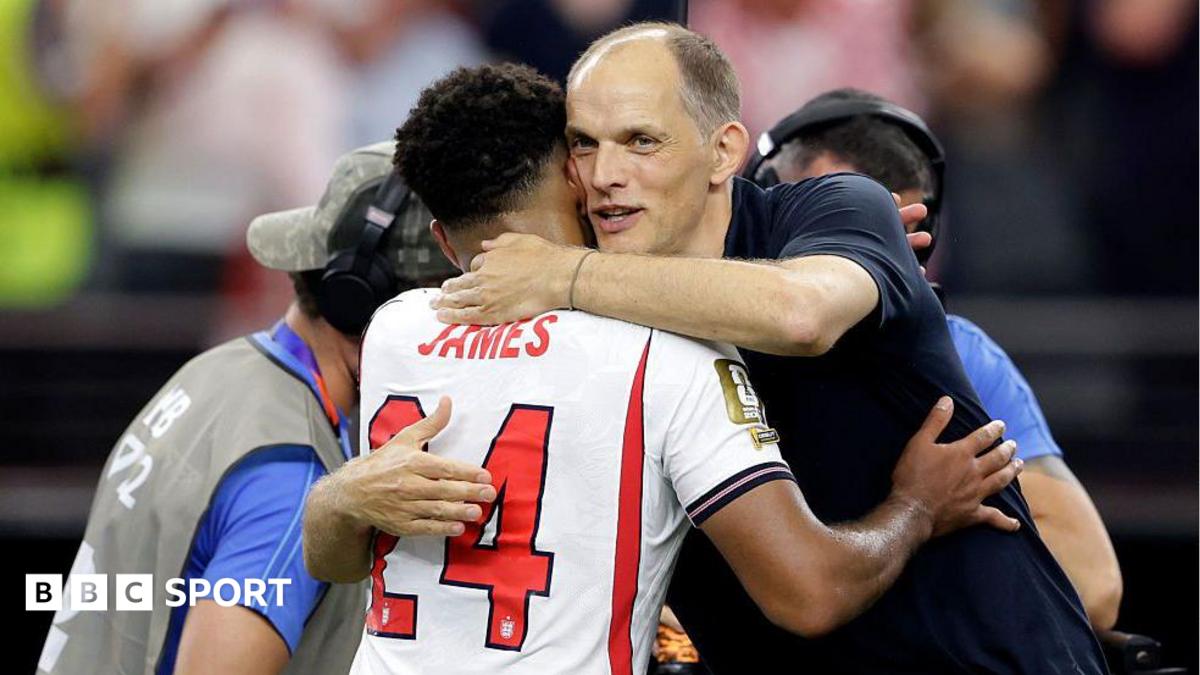
Thomas Tuchel has been forced to address England’s full-back situation after confirming Reece James will miss Saturday’s World Cup match against Panama. The update is significant not only because James is one of England’s most technically secure wide defenders, but also because it places renewed scrutiny on a position that often shapes how Tuchel wants his teams to build play and control territory.
Tuchel’s defence of his selection policy suggests he is not treating the issue as a simple case of replacing one player with another. Full-back choices at tournament level are rarely just about defensive cover. They affect how a side progresses the ball, how wide players are supported, and how much balance the team has when it tries to press or recover possession. For England, that makes James’ absence more than a routine injury note.
Why James’ absence matters
James has long been valued for his ability to contribute at both ends of the pitch, offering defensive reliability while also giving his side an extra passing option in possession. When a player with that profile is unavailable, managers often have to decide whether to prioritise natural width, defensive stability, or a more conservative shape. Tuchel’s comments indicate that he sees the broader selection picture as more complex than a single injury replacement.
For supporters, the immediate concern is how England will adapt against Panama. Tournament matches can turn on structure and discipline, especially when a team is expected to control the game. A change in the full-back area can alter the rhythm of England’s attacks and the way the side protects transitions, particularly if the replacement profile is different from James’ blend of athleticism and technical quality.
Selection policy under the microscope
Tuchel’s response also reflects the reality that international managers are judged heavily on squad management. Injuries are unavoidable, but the way a coach prepares for them often determines whether a team can maintain its tactical identity. In that sense, the full-back debate is about more than one match: it is about whether England can keep the same level of control and flexibility if key defenders are unavailable.
The BBC Sport report does not provide further detail on the exact alternative Tuchel will use, but the message is clear enough. England’s staff are having to adjust, and the manager is standing by the logic behind his wider selection decisions. That will reassure some fans who want consistency, while others will see it as a reminder of how fragile tournament plans can become when injuries strike.
With Panama next on the schedule, England’s response will be measured not just by the result, but by how smoothly the team copes with a disrupted defensive setup. If Tuchel’s selection calls hold up, the injury to James may become a short-term setback rather than a defining problem. If not, the full-back conversation could become one of the early talking points of England’s World Cup campaign.
Source note: This article was prepared using publicly available information from BBC Sport and expanded with editorial context.
Share this content: