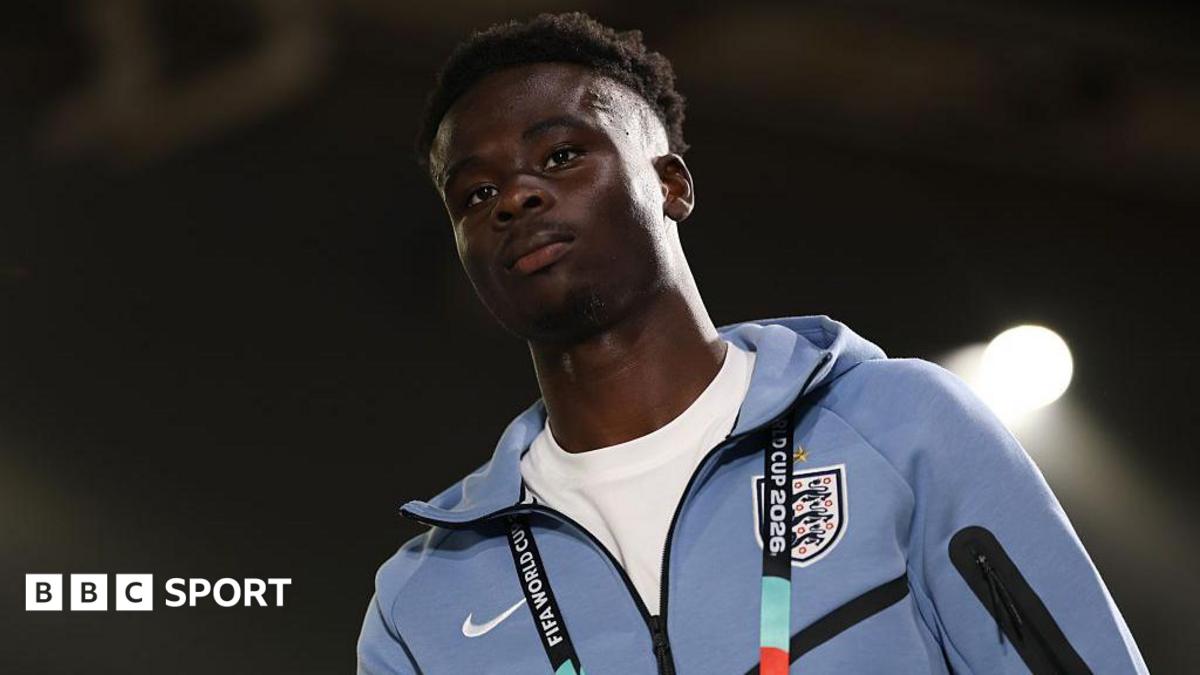
England’s World Cup build-up has taken a slightly cautious turn, with Bukayo Saka the only player not involved in group training as the squad prepared for their second match against Ghana. The update is notable less for alarm than for what it suggests about England’s management of workload at a tournament where recovery, rotation and fitness control can be as important as tactics.
For supporters, the immediate question is whether Saka’s absence from the main session points to a fitness issue or simply a tailored programme. The source does not say, and that distinction matters. Tournament training is often shaped by individual recovery plans, especially when a player is expected to be central to the team’s attacking rhythm. England will not want to overstate the situation, but they will also be aware that any disruption to one of their most dynamic wide players changes how the side can stretch opponents.
England’s preparation and the importance of squad management
At World Cup level, training-ground detail can reveal as much about a team’s priorities as the match itself. A player working separately is not automatically a warning sign, yet it does underline how carefully squads are being handled between games. England’s staff will be balancing intensity with freshness, particularly if they expect Saka to be important in transition, one-v-one situations and final-third combinations.
That is especially relevant against Ghana, a side that can make games physically demanding and often benefits when opponents lose sharpness in wide areas. If Saka is unavailable or only partially ready, England’s attacking structure may need adjustment. The team would lose a direct runner who can pin full-backs back, create overloads on the right and provide a reliable outlet when possession becomes congested.
What it means for England and supporters
For England fans, the bigger picture is that this is still early tournament management rather than a confirmed setback. The BBC report offers one clear detail: Saka was the only player not in group training. Beyond that, there is no verified indication of injury severity, absence from the squad, or a likely timeline. That makes it a story to monitor rather than a conclusion to draw.
England’s challenge now is to keep their squad balanced while preserving the sharpness of players who can decide tight matches. If Saka is being protected, it may simply reflect a sensible approach to a long competition. If it is a sign of a problem, then England’s attacking plans against Ghana could become more conservative, with greater responsibility falling on other creators to provide width and penetration.
Either way, the update adds a layer of intrigue to England’s preparations. In tournament football, even a single altered training routine can shape the conversation around selection, fitness and match strategy. For now, the facts are limited, but the implications are clear: England are being careful, and Saka remains the player everyone will be watching most closely before kick-off.
Source note: This article was prepared using publicly available information from BBC Sport and expanded with editorial context.
Share this content: