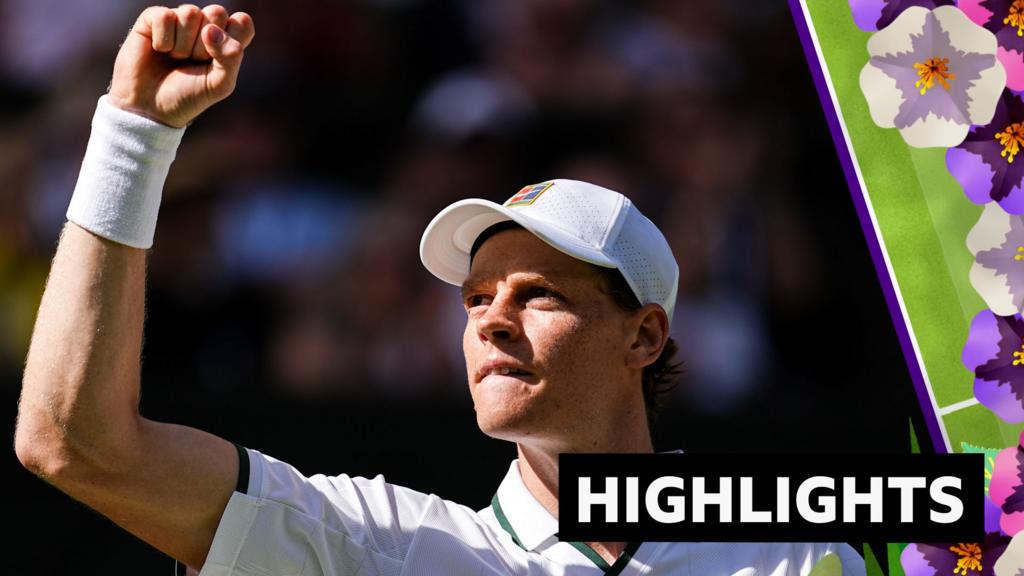
Jannik Sinner’s Wimbledon title defence began with a warning rather than a statement, but the world No. 1 did enough to stay alive in the tournament after a testing five-set win over Miomir Kecmanovic. The Italian was forced to recover from a difficult start, with a slip and an injured foot briefly threatening to turn the opening round into a major upset.
For a player carrying the pressure of being the defending champion, this was the kind of match that can shape a tournament early. Sinner did not cruise through the first round; instead, he had to manage discomfort, reset mentally and find a way through against an opponent who sensed vulnerability. That matters at Wimbledon, where confidence on grass often grows from surviving awkward moments as much as from producing clean, dominant tennis.
A shaky start, but a champion’s response
The key takeaway is not simply that Sinner won, but that he found a route through when the match became messy. Grass courts punish hesitation, and any physical issue can quickly become tactical as well as medical. A player who is not moving freely can struggle to set up the serve, defend the baseline and change direction with authority. Sinner’s ability to come from behind suggests both resilience and the kind of problem-solving that champions need in the second week and beyond.
There is also a wider context here for supporters and rivals alike. Wimbledon title defences are rarely straightforward, and early-round pressure can expose even the most complete players. Sinner’s win will reassure his fans that he can absorb disruption and still find a result, but it will also prompt questions about how much the foot issue affected him and whether he can sharpen up physically before the draw becomes more demanding.
What it means for the rest of the draw
From a tournament perspective, Sinner’s progress preserves one of the headline storylines at Wimbledon. The defending champion remains in the bracket, and that keeps the top half of the event loaded with expectation. For opponents, the match may offer encouragement that Sinner can be pushed if he is not at full rhythm. For Sinner, it is a reminder that the margin for error on grass is thin and that early-round survival can be just as important as style points.
In practical terms, this was a valuable first step rather than a flawless one. Sinner has bought himself more time, more matches and more opportunity to settle into the event. If the foot issue is minor, this could be remembered as the kind of scare that sharpens a champion. If it lingers, it may become the defining subplot of his defence. Either way, Wimbledon’s reigning champion has already been tested.
Source note: This article was prepared using publicly available information from BBC Sport and expanded with editorial context.
Share this content: