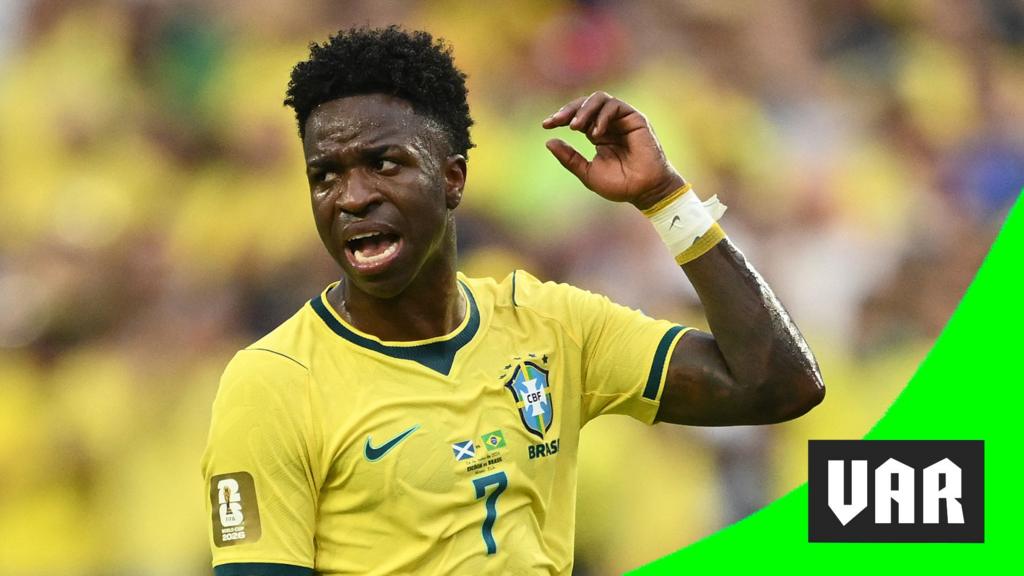
Brazil’s meeting with Scotland produced another reminder of how quickly a promising attacking moment can be erased by VAR. Vinicius Junior saw a second goal ruled out after the referee reviewed the incident on the monitor and judged that there had been a foul in the build-up.
For supporters, these moments are often the most frustrating part of modern football. A finish that looks decisive in real time can be overturned seconds later, leaving players, coaches and fans to reset emotionally in an instant. In this case, the intervention denied Brazil what would have been another significant contribution from one of their most dangerous forwards.
VAR again shapes the narrative
The key detail is not simply that the goal was disallowed, but how it was disallowed. The referee was asked to take a second look, which tells its own story about the level of uncertainty around the original on-field call. That process has become central to elite international football, especially in matches where physical duels and quick transitions can create borderline decisions in the attacking phase.
For Brazil, the incident is a tactical footnote with wider implications. When a team relies on wide players and direct runners to break down compact opposition, the timing of the final action matters enormously. A foul in the build-up can undo several phases of good work, and it can also change how aggressively a side continues to attack in the rest of the match.
What it means for Brazil and Vinicius Junior
Vinicius Junior remains one of Brazil’s most important attacking outlets because he can turn a match in a single action. Even when a goal does not stand, the fact that he is consistently involved in decisive moments is a positive sign for Brazil’s attacking structure. It also highlights the burden on elite forwards: they are judged not only on finishing, but on how often they can create the kind of chaos that leads to goals, penalties and set-piece pressure.
For Scotland, the decision will be viewed as part of the fine margins that often define games against top-level opposition. Staying organised and forcing officials to make difficult calls is frequently part of the defensive challenge in these fixtures. For Brazil, the episode is a reminder that dominance in possession or territory does not always translate cleanly on the scoreboard when VAR enters the picture.
In the broader context of international football, this is the sort of incident that can shape momentum without necessarily deciding the match outright. A disallowed goal can lift the defending side, frustrate the attacking team and alter the rhythm of the contest. For Brazil supporters, the takeaway is simple: Vinicius Junior is still finding the right spaces and making the right runs, but the final reward was taken away by a marginal foul call after review.
Source note: This article was prepared using publicly available information from BBC Sport and expanded with editorial context.
Share this content: