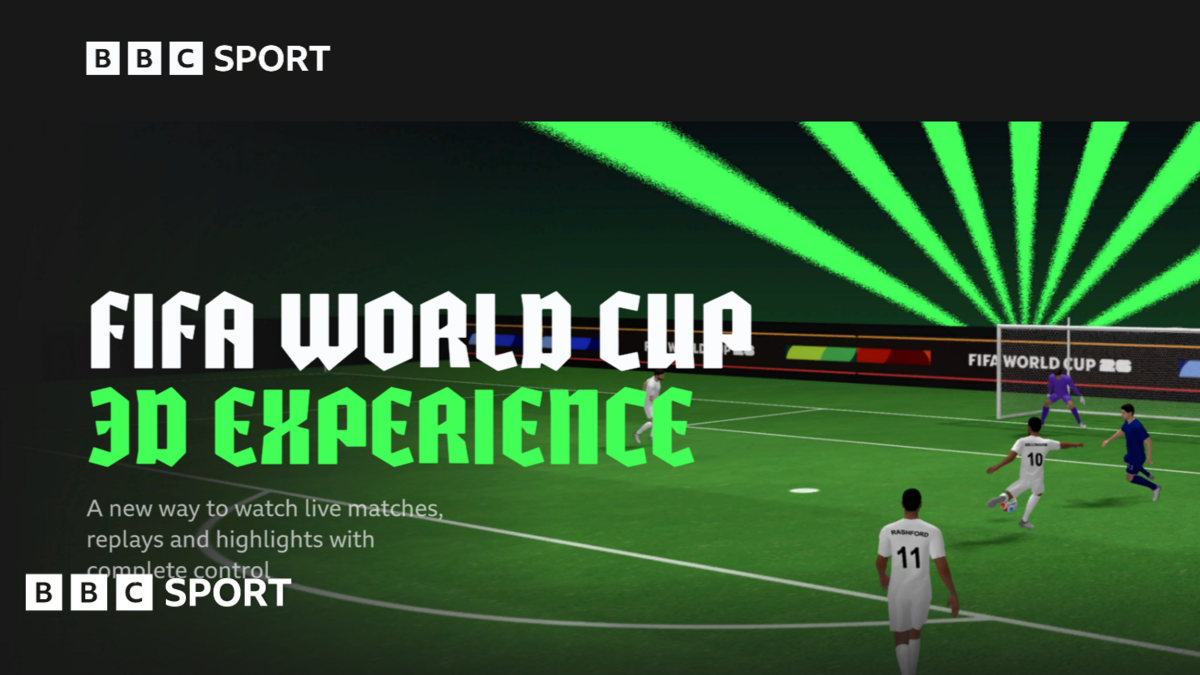
BBC Sport has added a new layer to its World Cup coverage with the launch of a 3D Live Match Experience for the 2026 FIFA World Cup. The feature is designed to give supporters a different way to follow matches, moving beyond the standard live text and broadcast formats that dominate major tournament coverage.
At a time when football audiences increasingly expect interactive digital tools, the BBC’s move reflects a broader shift in how elite tournaments are consumed. For fans unable to watch every match live, or for those who want a more immersive second-screen option, a 3D match environment can make the action easier to visualise and follow in real time.
What the BBC is trying to offer
The BBC has not simply added another score tracker. The 3D Experience is presented as a live match product built around the tournament itself, allowing users to engage with the game in a more visual format. That matters because World Cup coverage is no longer only about reporting the scoreline; it is also about helping fans understand momentum, shape, and key moments as they happen.
For supporters, the appeal is obvious. A tournament like the World Cup brings together audiences from different time zones and viewing habits, and digital features can help bridge the gap between watching a full match and staying connected to the action. In practical terms, that can be especially useful during simultaneous fixtures, when fans want quick context without losing the feel of the game.
Why it matters for modern football coverage
BBC Sport’s decision also speaks to the changing expectations around major football events. Broadcasters are under pressure to make coverage more interactive, more accessible, and more informative. A 3D format can support that aim by giving users another way to interpret the match, particularly when tactical detail and live flow are important.
There is also a wider editorial significance. Features like this are part of a growing competition between broadcasters and digital platforms to keep fans engaged throughout a tournament. For the BBC, the 2026 FIFA World Cup offers a high-profile stage to test whether a more immersive presentation can add value without replacing the core reporting and analysis that supporters still rely on.
The source also references Erling Haaland and the addition of ‘Braut’ to his Norway shirt, but the central news here is the BBC’s launch of the 3D Live Match Experience. For fans, the key question is whether the feature makes live football coverage feel clearer, faster, and more engaging. If it does, it could become a template for future tournament coverage well beyond this World Cup.
Source note: This article was prepared using publicly available information from BBC Sport and expanded with editorial context.
Share this content: