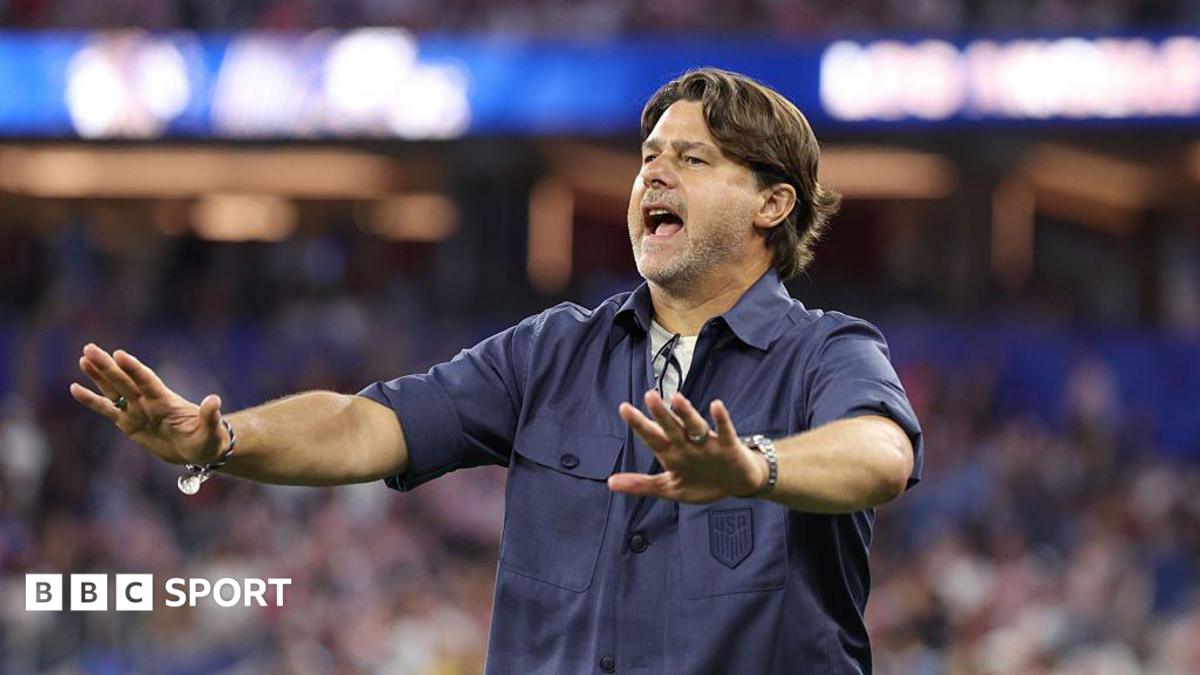
Mauricio Pochettino’s early work with the United States is beginning to show a clear tactical idea: less rigidity, more movement, and a structure designed to get the best out of the squad’s most dangerous players. According to BBC Sport, the US have been using a more fluid midfield approach, and that matters because this group is built around different strengths rather than one fixed style.
For supporters, that is an encouraging sign. The US player pool has long had athleticism, pace and individual quality, but the challenge has often been connecting those traits in a system that feels coherent. A flexible midfield can help bridge that gap. It allows runners to break lines, creators to receive in better spaces, and full-backs to push higher without leaving the team exposed in transition.
Why the structure suits this squad
The BBC report points to the attacking runs of Folarin Balogun, the dribbling quality of Christian Pulisic, the engines of Weston McKennie and Tyler Adams, and the pace of Antonee Robinson and Sergiño Dest as key reasons the setup is working. That combination is important. Balogun thrives when service arrives quickly and centrally. Pulisic is most dangerous when he can isolate defenders and attack space. McKennie and Adams bring the running power and defensive coverage that let others take risks. Robinson and Dest, meanwhile, add width and depth from the flanks.
In practical terms, a fluid midfield gives Pochettino more ways to connect those pieces. Rather than forcing the team into a rigid shape, the system can adapt depending on who is receiving between the lines, who is making the third-man run, and which side is overloaded. That kind of flexibility is often what separates a promising international side from one that can consistently control matches.
What it means for the USMNT
The bigger implication is that Pochettino may be building a team that is harder to predict and better suited to tournament football. International sides do not have the luxury of long club-style training cycles, so clarity of roles matters. But so does adaptability. If the midfield can rotate intelligently while still protecting the back line, the US can become more dangerous against compact opponents and more stable against stronger ones.
There is still a long way to go before any tactical idea can be judged fully, but the early signs are positive. For US supporters, the appeal is obvious: a team that looks less mechanical, more connected, and better able to turn individual talent into collective threat. If Pochettino can keep that balance, the USA could become a far more difficult opponent in the months ahead.
Source note: This article was prepared using publicly available information from BBC Sport and expanded with editorial context.
Share this content: