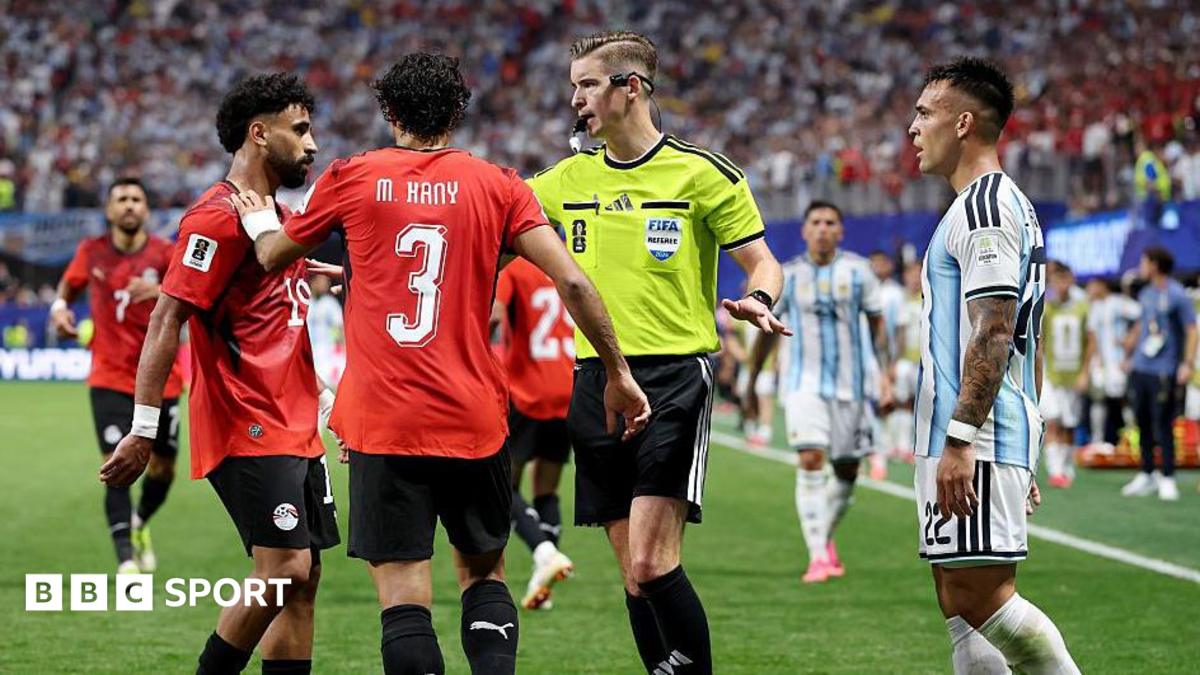
Fifa’s chief refereeing officer Pierluigi Collina has moved to shut down criticism of World Cup officials after allegations surfaced in the wake of Egypt’s 3-2 defeat to Argentina. His message was direct: the integrity of the match officials should not be in doubt.
The intervention matters because refereeing scrutiny is never far away at major tournaments, especially when a tight game ends in controversy. In this case, the result itself — a one-goal margin in a high-pressure World Cup contest — has clearly fuelled debate, but Collina’s response is aimed at separating emotion from evidence. That distinction is central to how elite officiating is judged, particularly in an era when every decision is replayed, dissected and amplified across social media.
Why Collina’s defence matters
Collina is one of the most authoritative voices in world refereeing, and his public backing of the officials is designed to protect confidence in the tournament’s standards. For supporters, the issue is not only whether a single decision was correct, but whether the wider system can withstand pressure after a disputed result. Fifa will want to avoid any perception that match officials are being undermined without proof, because that can damage trust in the competition as a whole.
From a football perspective, this is also a reminder that World Cup referees operate under intense examination. Close matches often become flashpoints, and when a team loses narrowly, frustration can quickly turn into accusations. Collina’s comments suggest Fifa is treating the matter as one of reputation and process, not just one isolated match.
What it means for the tournament
For Egypt, the defeat to Argentina will sting because the scoreline kept the game alive until the end, leaving room for debate over key moments. For Argentina, the result was another step in a tournament where margins matter and discipline around officiating can become part of the wider narrative. For the referees, Collina’s statement is a public vote of confidence at a time when scrutiny is at its highest.
Supporters following the World Cup will read this as more than a routine defence of officials. It is a signal that Fifa wants to draw a line under speculation and keep attention on the football itself. Whether that succeeds will depend on how the rest of the tournament is officiated, but Collina has made clear that accusations without foundation will not be allowed to define the conversation.
In a competition where every decision can shape a nation’s fate, that stance is likely to resonate well beyond this one match.
Source note: This article was prepared using publicly available information from BBC Sport and expanded with editorial context.
Share this content: