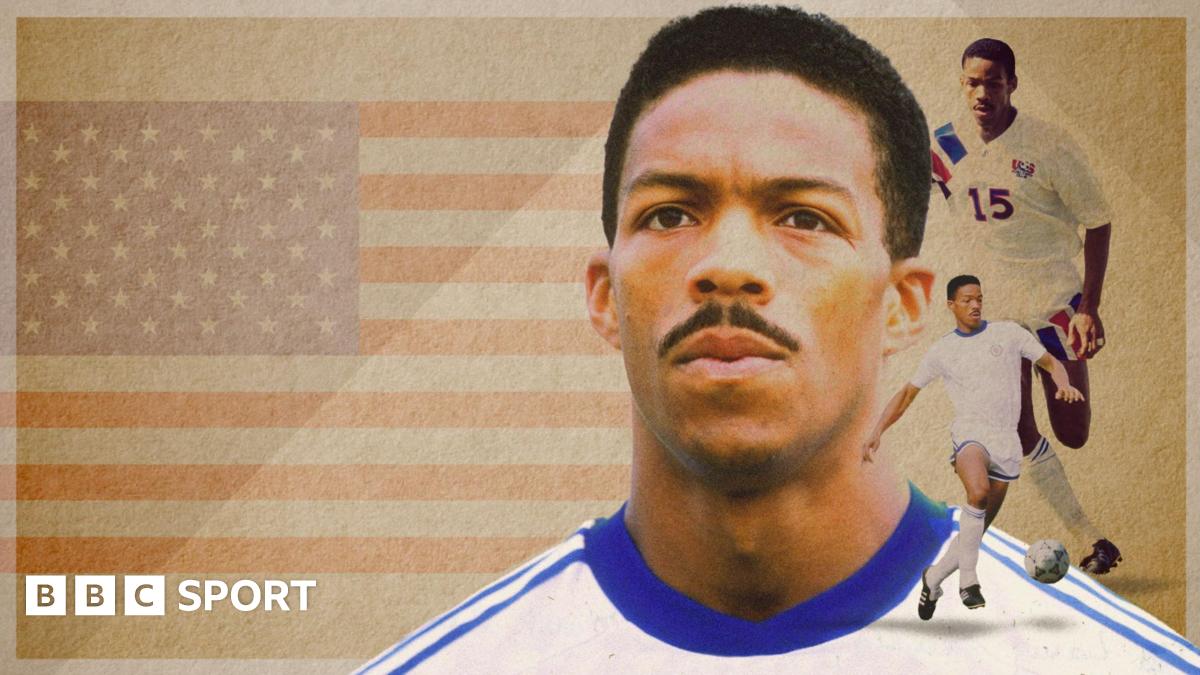
Desmond Armstrong’s place in United States football history is secure for reasons that go beyond one tournament. At the 1990 World Cup in Italy, the 25-year-old defender became the first US-born Black player to represent the United States at a World Cup, a landmark moment in a side that had returned to the global stage after a 40-year absence.
That context matters. The U.S. team’s qualification itself was notable, but Armstrong’s appearance added another layer to the story: a national team still building its identity, and a player carrying a symbolic burden in a sport that was only beginning to establish a broader American audience. The opening question he faced from the media — “Why aren’t you playing basketball?” — captured the cultural assumptions surrounding football in the United States at the time, and the challenge players like Armstrong were helping to change.
A milestone in a team still finding its footing
For supporters of U.S. soccer, Armstrong’s story is a reminder that progress has often been incremental rather than immediate. The 1990 squad was not merely a return to the World Cup; it was part of a longer process of making the national team more visible, more credible and more representative. Armstrong’s selection and appearance showed that the team’s development was not only about results, but also about who got to be seen on the biggest stage.
In modern terms, that makes Armstrong an important figure in the conversation around representation in football. The U.S. game has since grown dramatically, with a much wider player pool and a more established pathway into the sport. But milestones like Armstrong’s remain essential reference points because they show how much of that growth was built by players who entered the spotlight when the infrastructure and public recognition were far less developed.
Why the moment still resonates
There is also a tactical and sporting angle to the significance of 1990. A World Cup appearance is never just ceremonial; it is the highest level of pressure, scrutiny and exposure. For a defender like Armstrong, the stage would have demanded discipline, organisation and composure against elite opposition. Even without the full match-by-match detail in the source, the broader implication is clear: the U.S. were not only participating, they were beginning to test themselves against the standards that define international football.
For today’s supporters, Armstrong’s milestone is part of the sport’s memory bank. It speaks to representation, to the slow building of a football culture in the United States, and to the players whose careers helped widen the game’s reach. In a modern era where U.S. soccer is judged on World Cup ambitions and player development pipelines, Armstrong’s 1990 breakthrough remains a foundational chapter rather than a footnote.
Source note: This article was prepared using publicly available information from BBC Sport and expanded with editorial context.
Share this content: