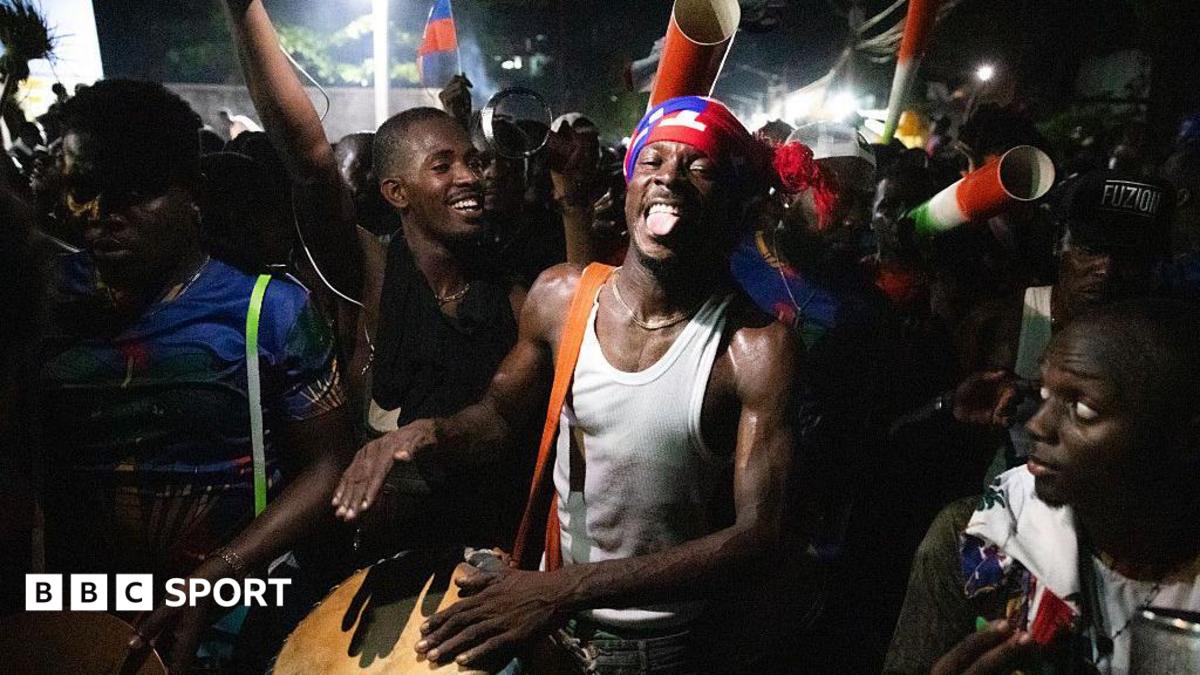
Haiti’s rare World Cup appearance is more than a sporting milestone. It is a reminder of how football can carry national memory, political symbolism and emotional weight in a country where everyday life has often been shaped by instability. BBC Sport’s feature looks beyond the result sheet and into the deeper meaning of Haiti reaching the game’s biggest stage.
The story reaches back to 2004, when then world champions Brazil travelled to Port-au-Prince for an exhibition match. According to the BBC report, the city came to a standstill and, for two days, the violence stopped. That detail matters because it shows why football in Haiti has never been just entertainment. In moments of rare international attention, the sport has offered something closer to collective pause, pride and hope.
Why Haiti’s World Cup moment matters
For supporters, a World Cup place is usually judged by points, group standings and the quality of the opposition. Haiti’s case is different. The significance lies in what qualification represents for a nation that has repeatedly had to fight for stability off the pitch as much as on it. A World Cup berth becomes a statement of endurance, not simply a footballing achievement.
That context also changes how the team is viewed tactically and emotionally. Haiti’s players are not only carrying a national shirt; they are carrying the expectations of a diaspora, a football culture that has had to survive difficult conditions, and a public that sees the team as one of the few sources of shared optimism. In that sense, every match at the tournament has implications beyond the scoreboard.
Football as a rare national pause
The Brazil exhibition match referenced in the BBC piece is a powerful example of football’s social reach. When a country is in conflict, even a friendly can become an event of national importance. The fact that Port-au-Prince stopped for Brazil’s visit underlines how international football can temporarily reshape the mood of a city and, by extension, a country.
That is why Haiti’s World Cup story resonates so strongly with supporters. It is not only about whether the team can compete with stronger opponents. It is about visibility, dignity and the chance to place Haitian football on a global stage. For a fanbase used to hearing about crisis before sport, the tournament offers a different narrative: one of representation, resilience and belief.
BBC Sport’s feature is therefore best understood as a football story with wider human stakes. Haiti’s rare World Cup appearance is not just a line in the record books. It is a reminder that in some places, football still has the power to interrupt hardship, if only for a moment, and give supporters something larger than the game itself to hold onto.
Source note: This article was prepared using publicly available information from BBC Sport and expanded with editorial context.
Share this content: