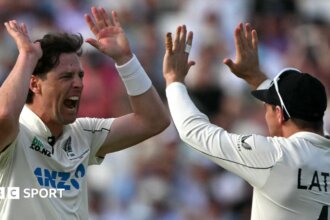
Emilio Gay’s innings at The Oval offered England a brief moment of control before the match swung back toward New Zealand. The opener compiled a patient 53 in the second Test, showing the kind of discipline that can steady a side in the early stages of a Test innings. But the relief of reaching a half-century lasted only a ball, with Gay dismissed in unusual fashion immediately after bringing up his milestone.
For England, that sequence matters because Test cricket is often decided not only by the runs scored, but by how long a batting side can keep pressure off the scoreboard. A patient opener who bats through the new ball can set a platform for the middle order; losing that wicket straight after a landmark can feel like a momentum shift, especially when the innings is still in its formative phase.
A useful innings that still left England exposed
Gay’s 53 was valuable because it came in a measured way, suggesting England were not simply relying on quick scoring to build their first innings. In a Test against New Zealand, that kind of innings can be particularly important. New Zealand’s attack is typically built around patience, accuracy and the ability to exploit any lapse in concentration, so an opener’s job is as much about survival and tempo as it is about runs.
The fact that Gay was out in bizarre circumstances on the very next ball adds another layer to the story. It is the sort of dismissal that can frustrate a batting group because it removes the sense of control just as a player appears to have settled. For supporters, it is a reminder of how quickly a promising position can become uncertain in red-ball cricket.
What it means for England in the second Test
England reaching 142-3 suggests the innings was still balanced, but not yet secure. A top-order contribution from Gay gives the side a base, yet the loss of his wicket at that point leaves the middle order with work to do. In Test matches, especially against disciplined opponents like New Zealand, the difference between a competitive total and a below-par one can come down to whether one or two batters convert starts into substantial scores.
For England supporters, Gay’s innings will likely be viewed in two ways at once: as evidence that he can occupy the crease and produce a meaningful score, and as a missed opportunity to turn that start into something more damaging for the opposition. The broader implication is that England still needed someone else to take the innings forward and convert the platform into a stronger first-innings position.
With the match still in its early stages, the key question is whether England can turn Gay’s patient contribution into a total that keeps them in control. If not, the dismissal that followed his fifty may come to be seen as one of the moments that allowed New Zealand back into the contest.
Source note: This article was prepared using publicly available information from BBC Sport and expanded with editorial context.
Share this content: