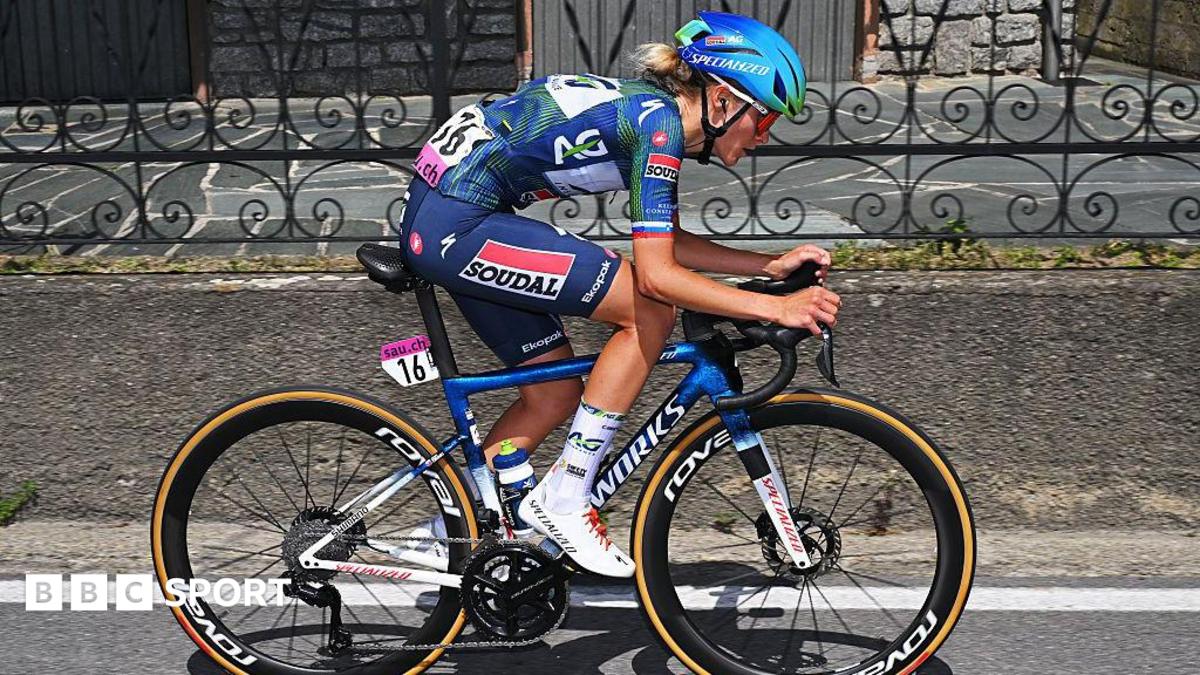
Urska Zigart’s Tour de Suisse Femmes ended in painful fashion on Thursday after the Slovenian rider broke her jaw in a heavy crash at the start of the final kilometre of stage two in Locarno. It was a stark reminder of how quickly a road race can turn, particularly when the peloton is fighting for position in the closing moments of a stage.
Late-race pressure and the danger of the final kilometre
The final kilometre is often where the pace rises, the road narrows and riders take the biggest risks to stay near the front. That context matters here: crashes in that phase are rarely isolated incidents, but the result of a high-speed battle for placement before the finish. For Zigart, the consequences were severe, with the reported jaw injury likely ruling out any immediate continuation in the race and forcing a recovery period that will take priority over results.
While the source does not give a full medical update, the fact that Zigart was conscious after the accident is an important detail. It suggests the crash, though serious, did not immediately escalate into a broader emergency. Even so, a broken jaw is a significant injury for any athlete, especially in a sport where eating, speaking and training all become difficult during recovery.
What it means for Zigart and the wider race
For supporters, the immediate concern is Zigart’s health rather than the standings. In stage racing, injuries like this can reshape a rider’s season, affecting not only the current event but also the build-up to future targets. The Tour de Suisse Femmes is an important race in the calendar, and losing a rider in this manner is a reminder of the physical cost behind the competition.
The incident also adds to the broader conversation around safety in professional cycling. Final-kilometre crashes are a recurring issue because the racing is compressed, the speeds are high and the margins are minimal. Teams and organisers continue to look for ways to reduce risk, but incidents like this show how difficult that challenge remains.
There was also a brief human moment after the crash: according to Slovenian media, Zigart later spoke to Tadej Pogacar, the 27-year-old world champion who is leading the general classification after the opening two stages of the men’s race. While the source does not elaborate on the conversation, the detail underlines the close-knit nature of the Slovenian cycling scene and the support network around riders when accidents happen.
For now, the story is less about race tactics or time gaps and more about recovery. Zigart’s injury will be monitored closely, and the priority will be to assess the full extent of the damage and the timeline for her return. In a sport built on endurance and resilience, this is another difficult reminder that the most decisive moments are not always the ones that appear in the results sheet.
Source note: This article was prepared using publicly available information from BBC Sport and expanded with editorial context.
Share this content: