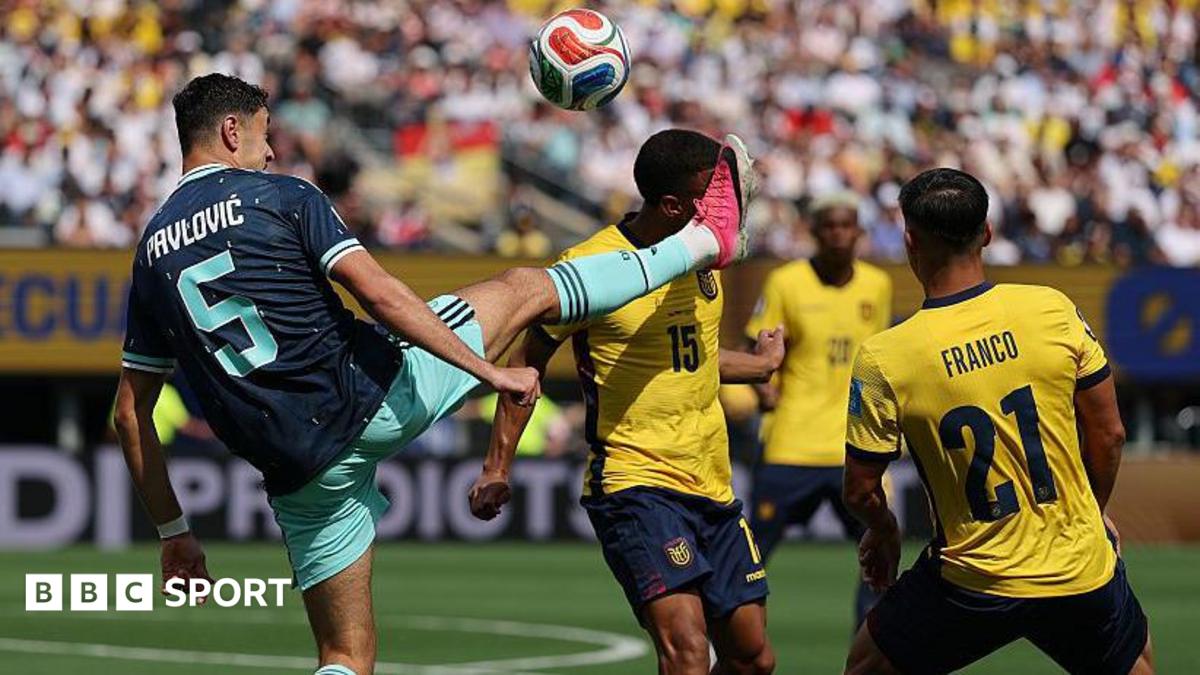
VAR has once again become one of the defining talking points at the World Cup, and not for the reasons tournament organisers would want. BBC Sport’s latest analysis asks whether the system has started to feel like a lottery, with supporters, players and coaches left trying to work out where the line is being drawn from one incident to the next.
The problem is not the existence of VAR itself. It is the perception that similar incidents can produce different outcomes depending on the match, the officials involved and the interpretation being applied in the moment. That uncertainty matters at a tournament where every decision can swing momentum, shape group standings and alter the path to the knockout rounds.
Why consistency matters so much at the World Cup
At the World Cup, the stakes are higher than in almost any other competition. A single penalty, a disallowed goal or a red card can change the entire tone of a game. That is why any suggestion that VAR is being used differently from one fixture to another quickly becomes a broader debate about fairness rather than just officiating.
For supporters, the frustration is obvious. Fans want clarity, not confusion. They can accept that football is a game of interpretation, but they are far less forgiving when the same kind of challenge appears to be judged differently on different days. That is especially true in a tournament watched globally, where every replay is analysed in real time.
What the debate means for teams and coaches
Coaches also have a practical concern: if the threshold for intervention is unclear, it becomes harder to plan around game states and discipline. Defenders may hesitate in the box, attackers may feel they need to exaggerate contact to get a review, and the rhythm of matches can be disrupted by long pauses and uncertainty.
BBC’s framing suggests the issue is not simply whether VAR is right or wrong, but whether it is being applied in a way that feels coherent to everyone involved. That is a crucial distinction. A system can only build trust if its decisions are understood, repeatable and explained in a way that matches what viewers see on screen.
For now, the World Cup debate around VAR is less about one isolated call and more about the cumulative effect of several contentious moments. If the tournament is to avoid a lasting credibility problem, officials will need to show that the technology is supporting the game rather than becoming the story itself.
Source note: This article was prepared using publicly available information from BBC Sport and expanded with editorial context.
Share this content: