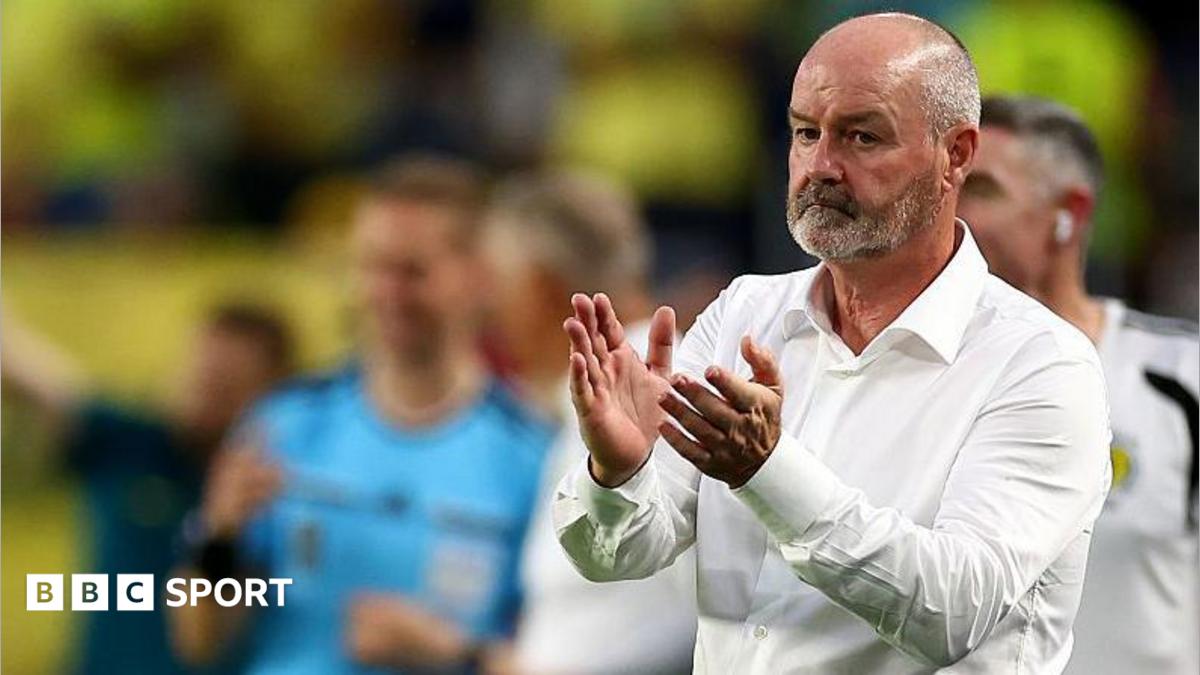
Steve Clarke’s decision to step away from the Scotland job after World Cup elimination was not presented as a sudden emotional reaction, but as the fulfilment of a plan he had already set in place. The 62-year-old said the choice was straightforward because he had always intended to leave if Scotland did not make the knockout stage.
That detail matters because it frames the end of his seven-year reign as a considered transition rather than a collapse in the aftermath of disappointment. For Scotland supporters, it also underlines how closely the manager tied his own future to the team’s performance on the biggest stage, where margins are unforgiving and qualification from the group is often the minimum benchmark for success.
A planned exit after a difficult group
Clarke informed his players on Saturday night at the team hotel in Charlotte after Scotland’s failure to progress from a group that included Brazil, Morocco and Haiti. The result closes a long chapter in which Clarke has been central to Scotland’s recent identity, with his tenure defined by structure, organisation and a clear tactical shape.
Even without further detail on the matches themselves, the group composition tells its own story. Brazil and Morocco bring elite-level pedigree and tournament experience, while Haiti added another layer of unpredictability to a section that offered little room for error. In that context, Scotland’s inability to advance will inevitably prompt debate about whether the squad has reached its ceiling, or whether the next manager can take a more aggressive approach in decisive games.
What Clarke’s departure means for Scotland
Clarke’s exit leaves Scotland facing a significant reset. A manager who has overseen the national side for seven years has had time to shape selection habits, defensive principles and the dressing-room culture. Replacing that continuity is never simple, particularly for a national team that must balance short-term results with long-term development.
For supporters, the immediate emotion will be disappointment at another tournament ending before the knockout rounds. But Clarke’s planned departure also creates clarity. Scotland now move into a new phase with the next appointment likely to be judged not only on results, but on whether the team can become more competitive against top-tier opposition and more ruthless in group-stage football.
In that sense, Clarke’s resignation is more than a personal decision. It is a marker of where Scotland are as a footballing nation: close enough to expect more, but still searching for the consistency required to turn promise into progress.
Source note: This article was prepared using publicly available information from BBC Sport and expanded with editorial context.
Share this content: