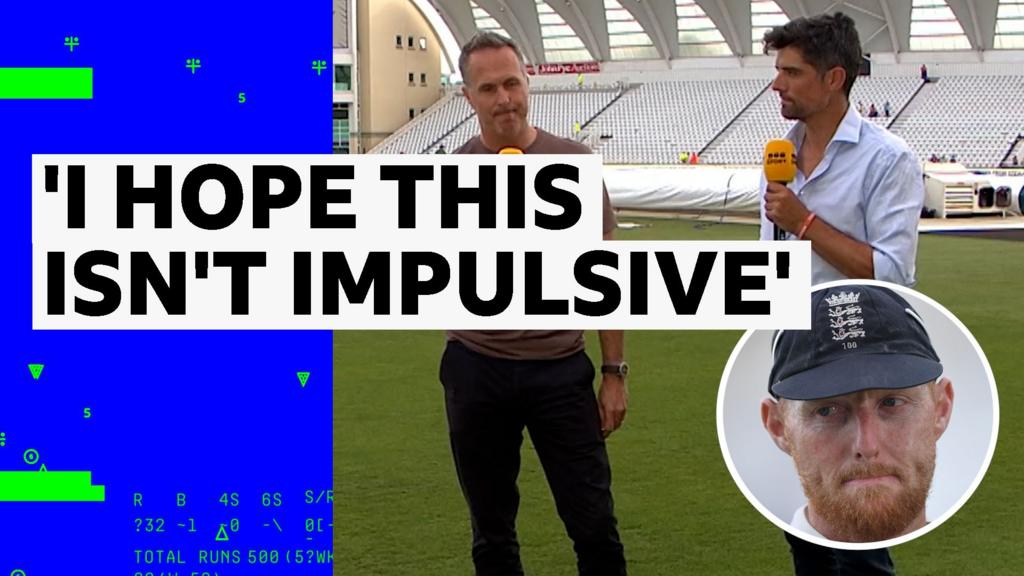
Ben Stokes’ future has become a talking point again after the third Test against New Zealand at Trent Bridge, with former England captains Michael Vaughan and Sir Alastair Cook weighing up whether the all-rounder may be nearing the end of his international journey. The BBC Sport video does not provide a full transcript, but the framing alone underlines how closely Stokes’ workload, leadership demands and long-term fitness remain under scrutiny.
For England supporters, any discussion about Stokes stepping away carries obvious significance. He is not just a senior player; he is the emotional centre of the side, the captain who has helped define England’s more aggressive modern Test identity. When a player with that level of influence becomes the subject of retirement speculation, it naturally raises questions about succession, dressing-room balance and how England would replace both his tactical edge and his competitive intensity.
Why Stokes’ future matters beyond one Test
Stokes has long been central to England’s red-ball plans because he offers more than runs or wickets. His value lies in the way he changes the shape of a match: he can attack with the bat, break partnerships with the ball and set a tone that encourages risk rather than caution. That makes any hint of retirement more than a personal decision; it becomes a strategic issue for England’s selectors and coaching staff.
The timing also matters. A discussion about retirement immediately after a Test against New Zealand suggests the conversation is being driven by the physical and mental demands of the format, rather than by a single result. Test cricket places a heavy burden on multi-role players, and Stokes has carried that burden for years. Even without a confirmed decision, the debate reflects the reality that England must always plan for life beyond its most important figures.
What Vaughan and Cook’s intervention tells us
When two former England captains publicly discuss whether a player has “had enough,” it usually signals more than idle punditry. It suggests the issue is being viewed through the lens of experience: the strain of leadership, the toll of repeated international cricket and the challenge of knowing when to step back. That perspective will resonate with fans who have watched Stokes push himself through injuries and heavy responsibility.
At this stage, the BBC item should be treated as a prompt for reflection rather than confirmation of any retirement plan. Still, it is a reminder that England’s Test era under Stokes is built around a player whose presence shapes selection, tactics and mentality. If he does choose to step away, the impact would be felt immediately, not only in the XI but in the broader identity of the team.
For now, the story is less about an announcement and more about a question: how long can England continue to rely on a captain whose influence is so central that even speculation about his future becomes major cricket news?
Source note: This article was prepared using publicly available information from BBC Sport and expanded with editorial context.
Share this content: