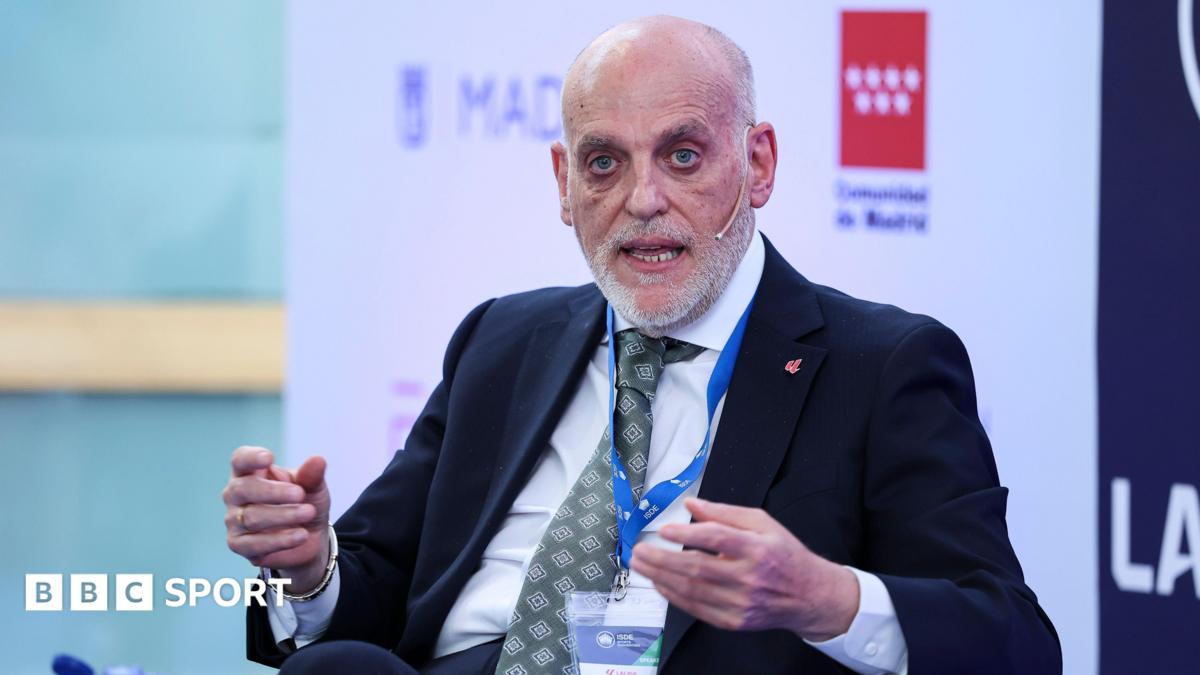
Javier Tebas has once again positioned himself as one of football’s most outspoken power brokers, this time turning his criticism directly on FIFA president Gianni Infantino. According to the BBC report, the La Liga chief believes the world governing body is not merely making poor decisions, but actively damaging the wider football economy.
The headline message is blunt: Tebas wants Infantino to step down. That is a significant escalation in a long-running power struggle that has increasingly defined the relationship between domestic leagues and football’s global administrators. For supporters, the dispute is not just about politics at the top of the game. It affects the calendar, the workload on players, the value of domestic competitions and the balance between club football and international expansion.
Why Tebas is taking aim at FIFA
Tebas’ comments reflect a broader frustration among league executives who feel FIFA has pushed ahead with reforms and tournament expansion without enough regard for the impact on clubs. The phrase “destroying the football industry” is especially pointed because it frames the argument in economic terms as well as sporting ones. That matters in Spain, where La Liga has spent years trying to protect the profile and commercial strength of its domestic product against pressure from European and global competition.
For La Liga, the concern is straightforward: more games, more travel and more international commitments can mean more strain on squads and less room for domestic competitions to breathe. Even when the biggest clubs benefit from global exposure, league bosses often argue that the overall structure becomes harder to sustain if the calendar keeps expanding.
What it means for clubs and supporters
This latest intervention also underlines how football governance has become a battleground over who controls the sport’s future. FIFA’s decisions can shape everything from tournament scheduling to player availability, and those choices ripple down to clubs, managers and fans. Supporters may not follow the politics closely, but they feel the consequences when fixture congestion rises or when major competitions are reworked to fit a global agenda.
Tebas has built a reputation for speaking forcefully on these issues, and his latest remarks are likely to keep the pressure on FIFA at a time when the organisation is already under scrutiny over the direction of the international calendar. Whether his demand for Infantino to leave gains traction is another matter, but the message is clear: the conflict between domestic leagues and FIFA is far from settled.
For now, the BBC report captures another chapter in a familiar power struggle, with Tebas using his platform to argue that football’s governing structure is drifting away from the interests of the game’s core stakeholders.
Source note: This article was prepared using publicly available information from BBC Sport and expanded with editorial context.
Share this content: