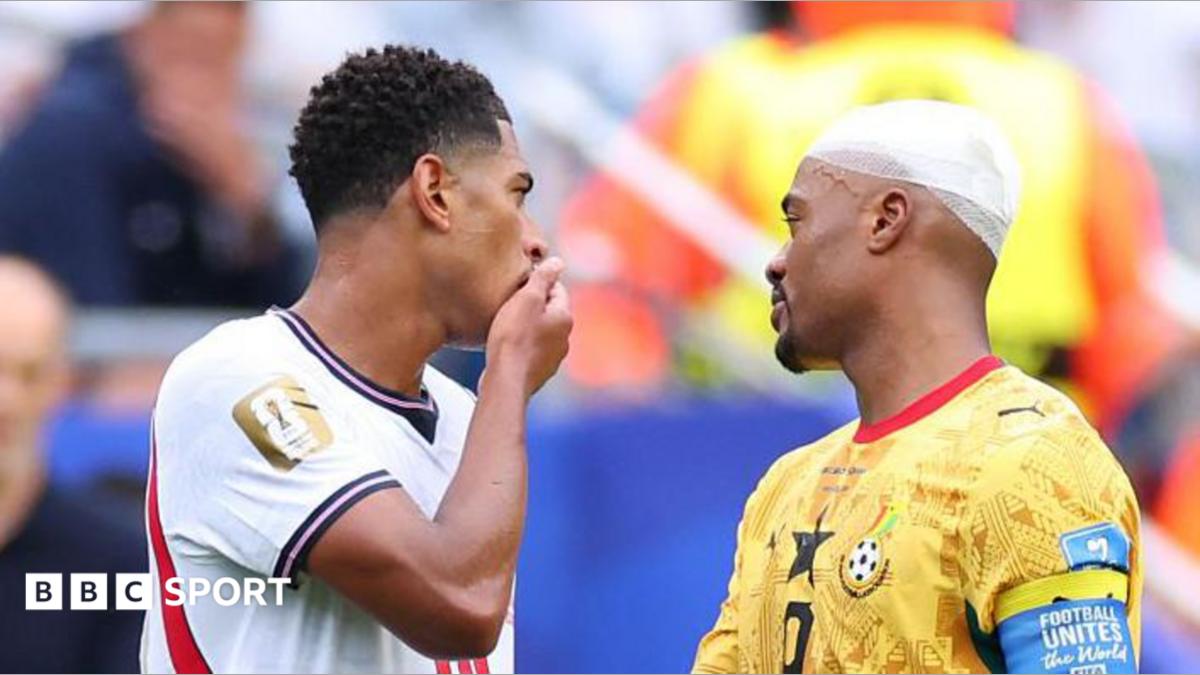
A single image has been enough to trigger a fresh wave of debate around Jude Bellingham, with BBC Sport reporting on why the England midfielder was not sent off after covering his mouth while speaking to Ghana’s Jordan Ayew. The picture has circulated widely because it invites the same question that follows many modern football flashpoints: what was actually said, and can anyone prove it?
That uncertainty matters. In an era where every gesture is scrutinised, covering the mouth during a conversation has become a familiar defensive habit for players who do not want lip-readers, cameras or opponents to capture their words. It is common enough to be routine, but in high-profile international football it can still generate suspicion, especially when the players involved are as visible as Bellingham and Ayew.
Why the image has caused controversy
The BBC’s framing suggests the issue is not a straightforward disciplinary one, but a question of interpretation. Without a clear audio record or an official report detailing offensive language, the image alone is not enough to establish misconduct. That is why the story has become less about a red card and more about the limits of evidence in football’s increasingly image-driven media cycle.
For supporters, that distinction is important. England fans will see the episode as another example of Bellingham being placed under a microscope because of his profile and influence. Ghana supporters, meanwhile, will be focused on whether the exchange reflected tension, gamesmanship or simply a routine on-field conversation that has been blown out of proportion.
What it means for Bellingham and England
Bellingham’s status means even minor incidents can become major talking points. As one of England’s most important midfielders, he is expected to carry both technical responsibility and emotional control. That makes any controversy around his conduct more newsworthy than it might be for a lesser-known player. It also means England’s wider public image can be affected by moments that are ambiguous rather than conclusive.
From a footballing perspective, the episode is a reminder of how much modern matches are shaped by perception. Players now operate in a space where body language, camera angles and social media reaction can define the narrative almost instantly. Whether the conversation with Ayew was harmless or heated, the fact that it became a story shows how quickly context can be lost once a still image enters the public domain.
For Goal Sports News readers, the key takeaway is simple: the controversy is real, but the evidence in the source material is limited. BBC Sport’s report centres on the image and the question of why no dismissal followed, rather than on any confirmed wrongdoing. Until more verifiable detail emerges, the incident remains a matter of interpretation rather than proven disciplinary offence.
Source note: This article was prepared using publicly available information from BBC Sport and expanded with editorial context.
Share this content: