Football’s global reach is often measured by television audiences, transfer fees and stadium crowds, but the BBC’s report from Nauru offers a very different lens. On the world’s smallest island nation, the game briefly became part of everyday life during the World Cup before fading back into near invisibility once Spain lifted the trophy.
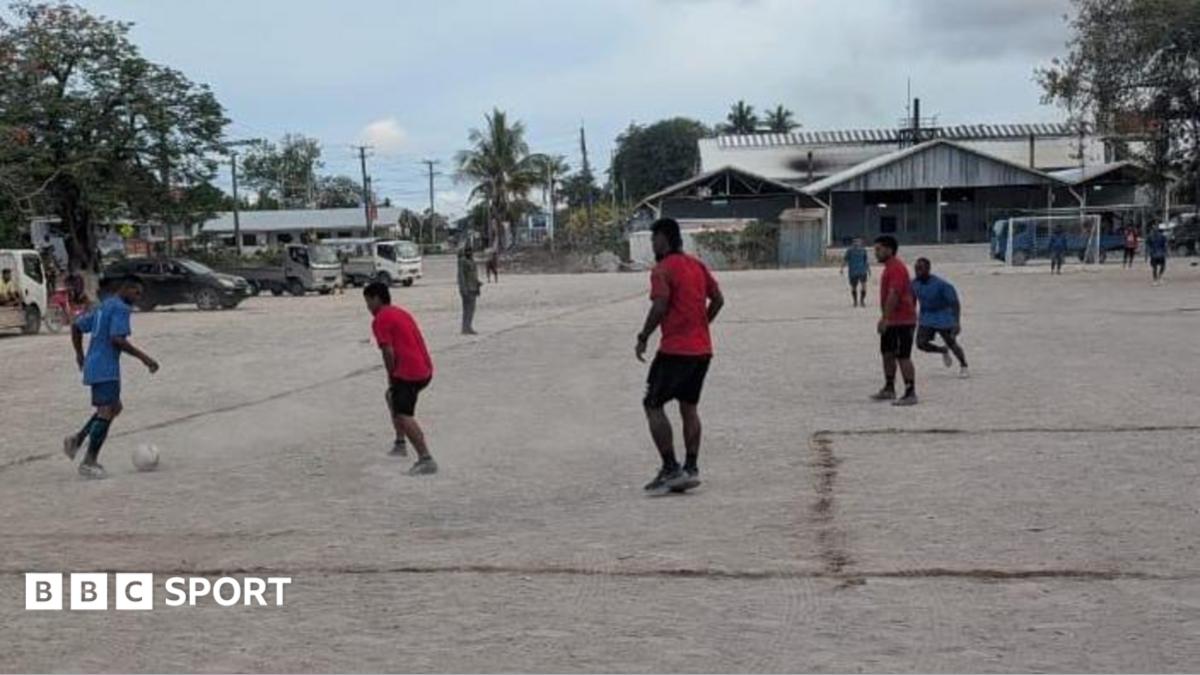
That contrast matters. It shows how football can capture attention even in places where the sport has almost no formal structure. Nauru has never entered an official international match, and the island’s only pitch is a hard-sand surface, a reminder that participation in the game is not always defined by elite facilities or organised leagues.
Football interest without football infrastructure
The report suggests that the World Cup created a short-lived football fever across the island, but the challenge for Nauru is what happens after the tournament ends. In countries with established federations, major competitions often leave behind stronger participation, youth pathways and local club activity. On Nauru, the absence of those systems means the sport can quickly disappear from view once the global spotlight moves on.
That makes the story bigger than novelty. It is about access, geography and the uneven spread of football’s infrastructure. For supporters elsewhere, it is easy to take pitches, coaching and competitive fixtures for granted. On Nauru, even the basic conditions for regular football are limited, which helps explain why the island remains outside the international football map.
What the World Cup means in places like Nauru
There is also a wider sporting implication. The World Cup does not only shape the elite game; it can influence how children and communities imagine sport in places with little formal opportunity. Even without a national team or a developed domestic scene, the tournament can still create moments of shared attention and aspiration.
For Goal Sports News readers, the significance is clear: football’s power is not only in the countries that dominate the rankings or fill the biggest stadiums. It also lies in the places where the game exists in its most basic form, sustained by interest rather than infrastructure. Nauru’s story is a reminder that football’s footprint is global, but its foundations are not evenly built.
That makes the island’s single pitch more than a curiosity. It is a symbol of how the sport can be present even where it has not yet become organised, competitive or internationally recognised. In that sense, Nauru reflects one of football’s enduring truths: the game can arrive before the system does.
Source note: This article was prepared using publicly available information from BBC Sport and expanded with editorial context.
Share this content: