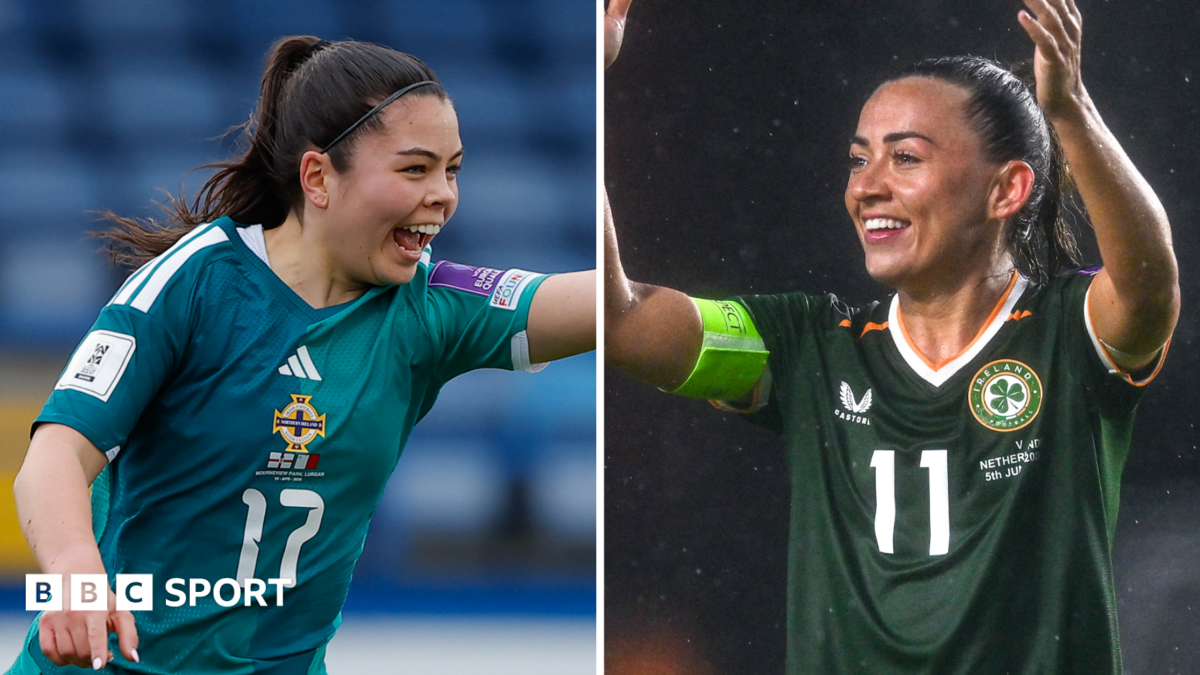
Northern Ireland and the Republic of Ireland now know the first hurdle on the road to the 2027 Women’s World Cup, with the draw setting up a far tougher assignment for one side than the other. Northern Ireland have been paired with Portugal, while the Republic of Ireland will meet Kazakhstan.
The immediate significance of the draw is clear: both teams remain alive in the qualification process, but the margin for error is now far smaller. For Northern Ireland, Portugal represent a demanding opponent and a tie that will require discipline, organisation and efficiency in both boxes. For the Republic of Ireland, Kazakhstan may look like a more manageable route on paper, but play-off football rarely rewards complacency.
Northern Ireland face a stern test
Portugal’s presence in the draw gives Northern Ireland a difficult path, and that will shape how supporters view the tie. In knockout football, the balance between defensive structure and attacking intent becomes decisive, especially when a side is expected to absorb pressure and look for moments to break. Northern Ireland’s challenge will be to stay compact, avoid cheap turnovers and make the most of set pieces and transitions.
That kind of matchup also tends to reward experience and game management. Even without the wider details of the bracket, the headline is obvious: Northern Ireland have been handed one of the more testing routes and will need a strong two-game performance to progress.
Republic of Ireland must avoid complacency
For the Republic of Ireland, Kazakhstan offer a different kind of test. On paper, the draw may appear kinder, but play-off ties often turn on small details such as tempo, finishing and concentration over 180 minutes. The Republic will be expected to control territory and possession for long spells, which brings its own pressure if the breakthrough does not come early.
That makes the tactical challenge just as real as the one facing Northern Ireland. Teams in this position often discover that the hardest part is not simply creating chances, but converting dominance into a result that settles nerves before the tie becomes tense.
For supporters, the draw gives both sets of fans a clear picture of what lies ahead: one side faces a heavyweight obstacle, the other a tie that still demands professionalism and focus. Either way, the route to the 2027 Women’s World Cup is now defined, and the next stage will test both nations’ depth, resilience and ability to handle pressure when qualification is on the line.
Source: BBC Sport
Source note: This article was prepared using publicly available information from BBC Sport and expanded with editorial context.
Share this content: