Iga Swiatek’s Wimbledon title defence did not begin with the sort of smooth authority that has often defined her rise to the top of the women’s game. Instead, the world No. 1 was pushed into a tense opening-round battle by Taylor Townsend before eventually coming through in three sets, a result that underlined both the pressure of defending a major title and the unpredictability of grass-court tennis.
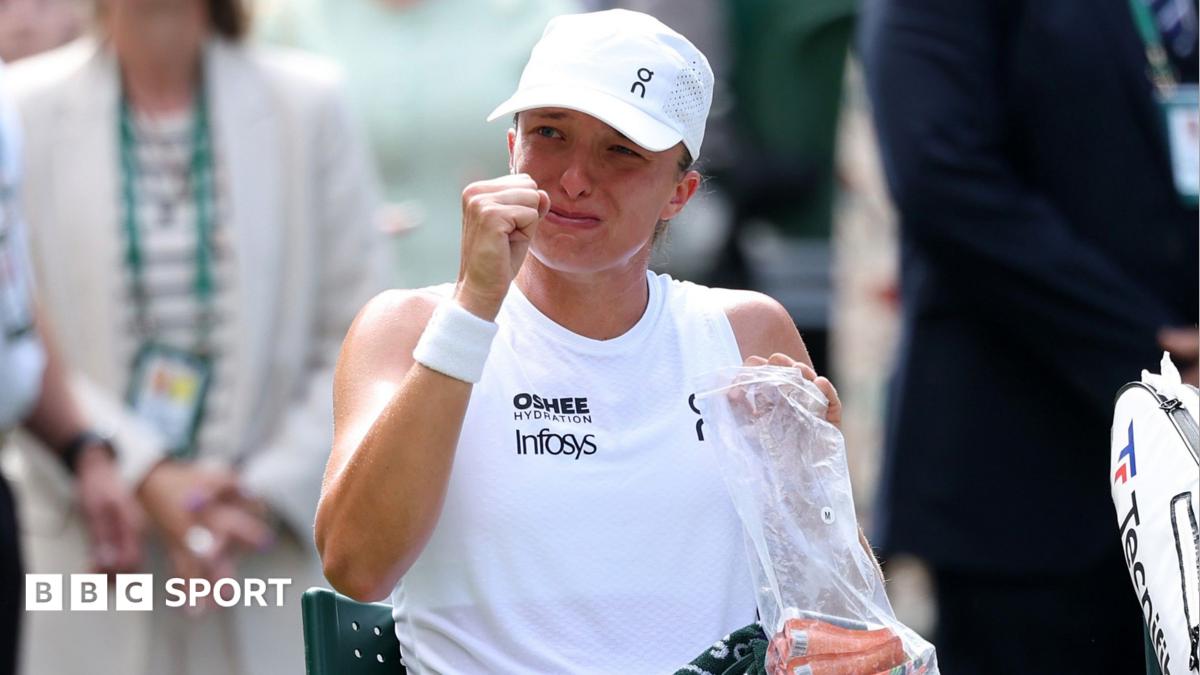
The emotional reaction at the end told its own story. Swiatek was visibly tearful on court after sealing victory, a reminder that even the most accomplished players can feel the weight of expectation when they return to a tournament as reigning champion. For supporters, it was a glimpse of the human side of elite competition: relief, tension and the knowledge that one difficult match can shape the mood of an entire fortnight.
A difficult start on grass
Grass remains the surface most likely to disrupt rhythm, and that is especially relevant for a player like Swiatek, whose dominance has been built largely on clay and hard courts. A first-round scare at Wimbledon does not change her status as a leading contender, but it does highlight how little margin for error exists at the All England Club. Against an opponent capable of taking time away and forcing quick decisions, Swiatek had to find a way through rather than simply impose herself.
That matters tactically as well as psychologically. Wimbledon often rewards players who can serve well, return aggressively and stay composed under pressure. When a favourite is dragged into a three-setter early in the event, it can either sharpen focus or expose lingering uncertainty. Swiatek’s response will be watched closely in the next round, because title defences are often built not on perfect performances but on surviving the awkward ones.
What it means for the rest of the tournament
For Swiatek, the immediate positive is simple: she is still alive in the draw and has already negotiated one of the most dangerous moments of any Grand Slam campaign. For Townsend, the performance will offer encouragement that she can trouble top-level opposition on a stage that demands both courage and precision.
For Wimbledon as a whole, the match served as an early reminder that the women’s draw can shift quickly and that even the favourite is vulnerable if the rhythm goes missing. Swiatek’s next outing will now carry added interest, not because of the result alone, but because of the questions it raises about how she settles into the tournament after such a fraught beginning.
Source note: This article was prepared using publicly available information from BBC Sport and expanded with editorial context.
Share this content: