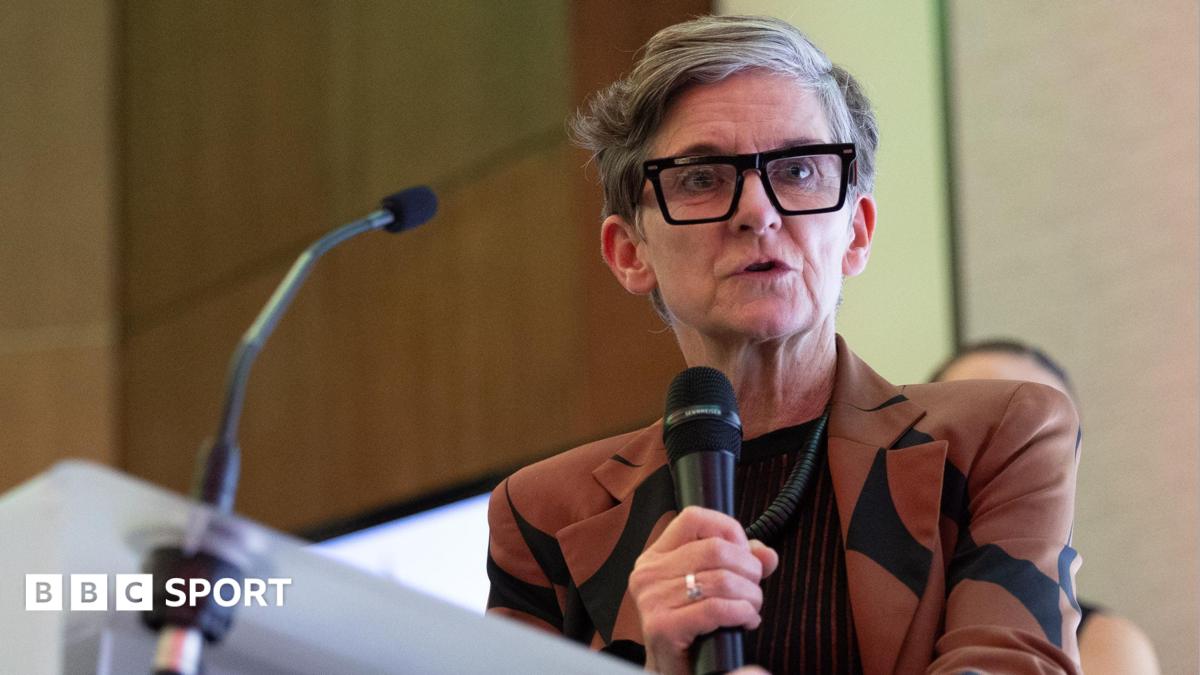
UEFA vice-president Laura McAllister has warned that the fallout from Folarin Balogun’s World Cup disciplinary outcome could set a troubling precedent for football governance, arguing that the sport risks sliding into what she described as “an absolute cesspit” of political interference.
The warning matters because disciplinary decisions at major tournaments are never just about one player or one incident. They can quickly become a test of how much pressure football’s institutions can withstand when national associations, supporters and public opinion all collide. In that sense, the Balogun case has become bigger than the player himself, with the debate now touching on the credibility of the process as much as the outcome.
Why the case has wider significance
Balogun’s avoidance of a ban has clearly irritated some observers, and McAllister’s intervention suggests the issue has struck a nerve at the top of the European game. Her concern is not simply about one ruling being unpopular. It is about the possibility that high-profile cases could encourage more lobbying, more public pressure and more attempts to influence decisions that are supposed to be made independently.
For supporters, that is an uncomfortable prospect. Football already lives with constant scrutiny over refereeing, VAR and disciplinary consistency. Add political pressure into the mix and the sport risks damaging trust in the systems that are meant to protect fairness. That is why McAllister’s language is so striking: it reflects a fear that the line between sporting justice and external influence could become increasingly blurred.
Belgium’s reaction adds fuel to the debate
The controversy was further amplified when Belgium’s official national team Instagram account appeared to mock the situation, posting a picture of striker Romelu Lukaku cupping his ear with the caption “overturn this”. Even without additional context, that kind of public reaction shows how quickly disciplinary disputes can spill beyond the pitch and into the wider football conversation.
Social media has become a powerful tool for national teams and players, but it can also sharpen tensions rather than calm them. In a case already loaded with emotion, the post underlined how easily a sporting decision can be turned into a public spectacle. That may delight some fans in the short term, but it does little to help football’s institutions present themselves as measured or impartial.
What it means for football going forward
The broader implication is clear: if governing bodies want to avoid accusations of inconsistency or bias, they need to communicate decisions clearly and defend the integrity of their processes. Cases like this are judged not only on the final ruling, but on whether the sport appears capable of handling pressure without bending to it.
For now, the Balogun decision has become a flashpoint in a much larger argument about authority, transparency and trust. McAllister’s warning suggests that football leaders are increasingly aware that every controversial call can have consequences far beyond one match or one tournament.
Source note: This article was prepared using publicly available information from BBC Sport and expanded with editorial context.
Share this content: