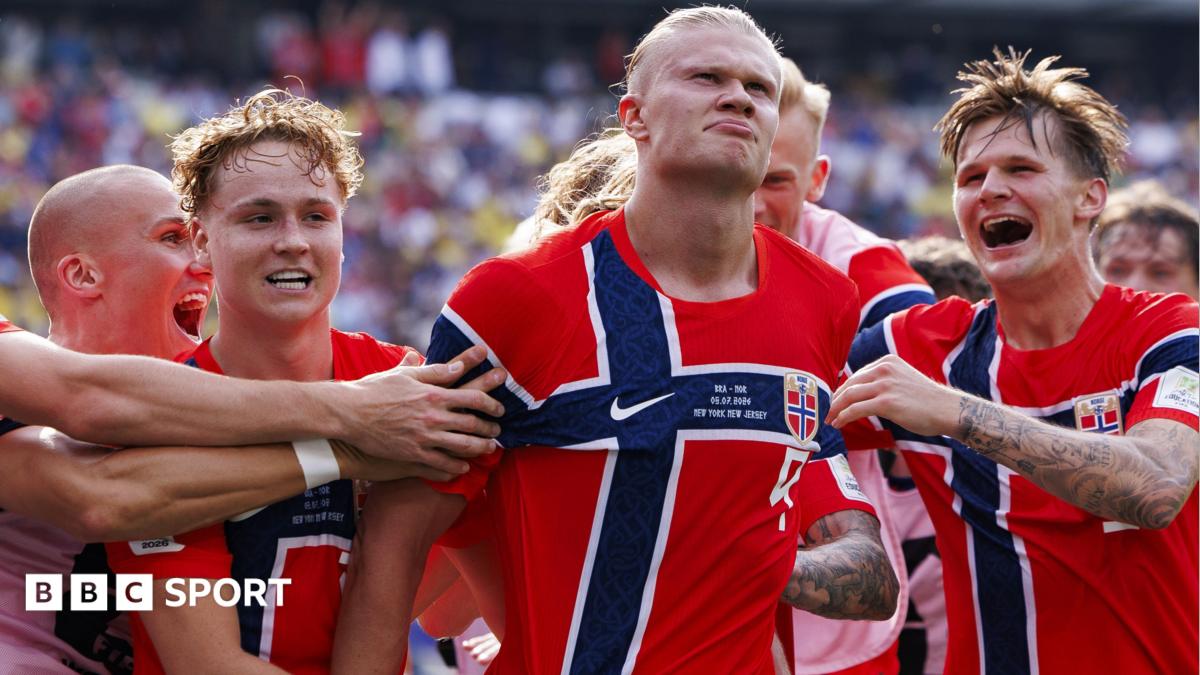
Norway’s rise is being held up by the BBC as a useful reference point for Scotland, with the central question not simply whether the Norwegians can compete, but what their progress says about the pathway for other nations trying to close the gap on the elite. The article points to a defining World Cup moment: Norway were 2-0 up against Brazil in a round of 16 match when ITV commentator Sam Matterface described them as “a force to be reckoned with”.
That kind of statement matters because it reflects more than a single result. For supporters, it is a reminder that international football can change quickly when a team combines organisation, belief and the ability to punish stronger opponents. For Scotland, a country that has long searched for consistency on the biggest stage, Norway’s example naturally invites comparison. The lesson is not that every underdog can copy the same route, but that a clear identity and competitive edge can shift expectations.
Why Norway’s example resonates
Beating or even controlling a heavyweight such as Brazil in a knockout setting is the sort of performance that changes how a national team is viewed. It can alter the conversation around development, confidence and ambition, especially for teams outside the traditional superpowers. Norway’s showing, as described by the BBC, suggests a side capable of turning structure into belief and belief into results.
For Scotland, that is relevant because the margins at international level are often small. Teams that are well-drilled, disciplined and decisive in key moments can make themselves difficult to beat, even against more gifted opponents. That is the tactical relevance of the Norway story: it is about more than talent alone. It is about how a team manages pressure, game state and momentum when the stakes are highest.
What it means for Scotland supporters
Supporters will read this kind of analysis as both encouragement and challenge. Encouragement, because it shows that progress is possible without belonging to football’s traditional elite. Challenge, because it underlines the need for Scotland to build a side that can produce similar levels of control and conviction when it matters most.
The BBC’s framing makes clear that Norway’s performance is being used as a benchmark, not a conclusion. The broader implication is that Scotland’s next steps should be judged not only by results, but by whether the team can develop a recognisable style that travels well in tournament football. That is the standard Norway’s history-making display sets.
Source note: This article was prepared using publicly available information from BBC Sport and expanded with editorial context.
Share this content: