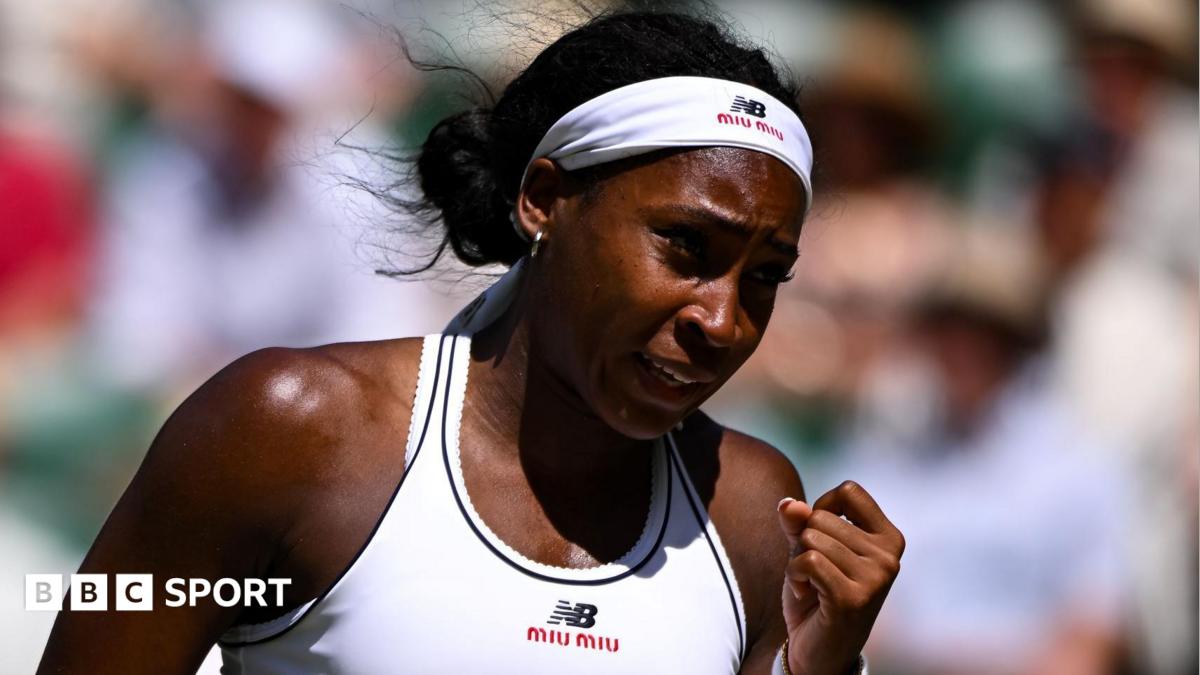
Coco Gauff has taken another significant step in her Grand Slam progression, reaching her first Wimbledon semi-final after a comeback victory over Jessica Pegula. For a player still early in her career but already carrying the expectations that come with elite status, the result is more than a single match win: it is evidence that her game is continuing to translate across surfaces and under pressure.
The victory matters because Wimbledon has often been the tournament where even top players can look exposed if their serve, return patterns or movement are not fully aligned. Gauff’s ability to recover from a difficult position against a fellow American and close out the match suggests a level of resilience that has become central to her rise. In a tournament where margins are narrow and momentum can shift quickly, that kind of response is often what separates contenders from champions.
Why this run matters for Gauff
Reaching a first Wimbledon semi-final is a notable milestone for any player, but it carries extra weight for Gauff because of the scrutiny around her development. She has already established herself as one of the leading names in women’s tennis, yet Wimbledon has remained a stage where the final breakthrough has not always arrived. This result changes that narrative and gives her a genuine foothold in the closing rounds of the sport’s most prestigious grass-court event.
From a tactical perspective, comeback wins at Wimbledon usually point to more than just shot-making. They often reflect improved problem-solving: better return positioning, more disciplined point construction and the ability to absorb pressure without losing clarity. Gauff’s progress through this match indicates she was able to find answers when the contest demanded them, which is a valuable sign for the remainder of the tournament.
What it means for supporters and the draw
For supporters, the significance is obvious. Gauff’s presence in the semi-finals gives fans a compelling storyline at a tournament that thrives on emerging stars taking control of the moment. It also reinforces the sense that she is no longer simply a promising talent; she is now operating in the territory where major titles become realistic targets.
Jessica Pegula’s defeat also matters in the wider context of the draw. When two high-level American players meet deep in a major, the match often serves as a benchmark for the strength of that nation’s women’s game. Gauff coming through that test adds to the credibility of her run and raises the stakes for what comes next. With the semi-finals now ahead, the question is no longer whether she belongs at this level, but how far she can push it.
The BBC report frames the moment around Gauff’s own reflection — “Am I a veteran now?” — and that line captures the broader theme of the day. She is still young, but results like this are the kind that begin to make a player look seasoned. Wimbledon has a habit of accelerating reputations, and Gauff’s latest win suggests hers is moving in exactly that direction.
Source note: This article was prepared using publicly available information from BBC Sport and expanded with editorial context.
Share this content: